Under pressure: posters between 1918 and 1933
Until August 9, "Under Pressure", a new poster exhibition at the Museum Wiesbaden, shows how visual communication was used by politicians between 1918 and 1933: To inform, to influence but also to manipulate.
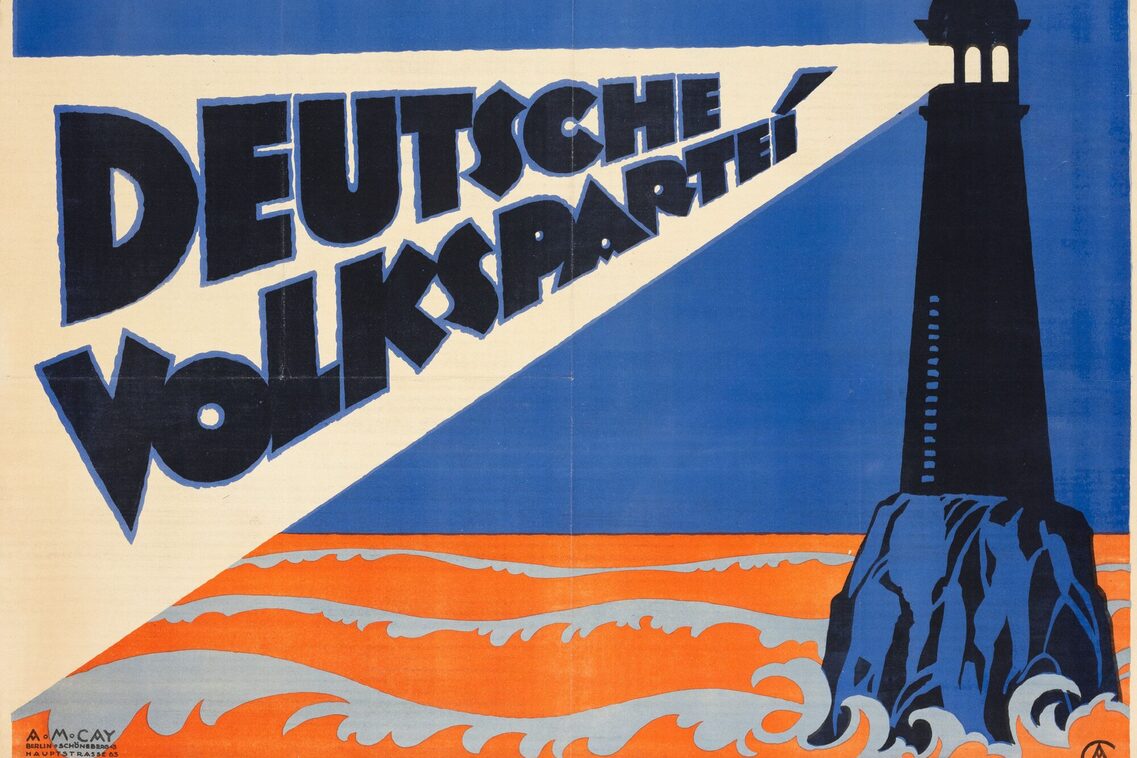
80 posters from the collection of Maximilian Karagöz from Wiesbaden illustrate how easily images can stir up emotions, create enemy stereotypes, or establish or fuel political sentiments.
Unlike commercial advertising, political posters do not have a long tradition in Germany. From 1849 to 1914, Prussia had strict laws that largely prevented the advertising of political content. The First World War brought about a change, and for the first time, political content was mixed with advertising poster designs on advertising columns in public spaces.
The political actors of the time commissioned artists, graphic designers, and typographers. The visual communication of the respective content drew on the repertoire of advertising designs, which used the "loudest" means to pursue the goal of selling products. Social conflicts, war, radicalization, and targeted propaganda are reflected in the poster designs from 1918 to 1933, especially in election campaigns.
With loans from Maximilian Karagöz's poster collection in Wiesbaden, the cabinet exhibition at the Museum Wiesbaden focuses on the period from the Weimar Republic to the beginning of the Nazi era. Political posters were like a declaration of war and made the competition between the parties of the time publicly visible.
"Unter" Druck reveals how visual communication was used – for information, influence, and even manipulation. The historical posters illustrate how easily images can stir up emotions, create enemy stereotypes, or change political moods. From factual arguments to objective and emotional appeals or even deliberate lies, a broad spectrum opens up that continues to develop in the political posters of the following decade.
The historical posters on display contain images and messages that we now consider highly problematic and that are characterized by racism, sexism, and anti-Semitism. Nevertheless, they enable us to reflect on today's political advertising in public spaces and show how art, typography, and design became instruments of political power.
In cooperation with the Hessian State Parliament, which is showing political posters from 1945 to 1991 in an exhibition (March 18 to April 12, 2026).