Environmental tip March: Balcony close to nature - small but full of life
A balcony planted close to nature is good for you: it is pleasing to the eye, provides shade and evaporation for a more pleasant microclimate and creates valuable retreats for animals and plants in the middle of the city. Even with simple means, you can make a small contribution to preserving biodiversity.
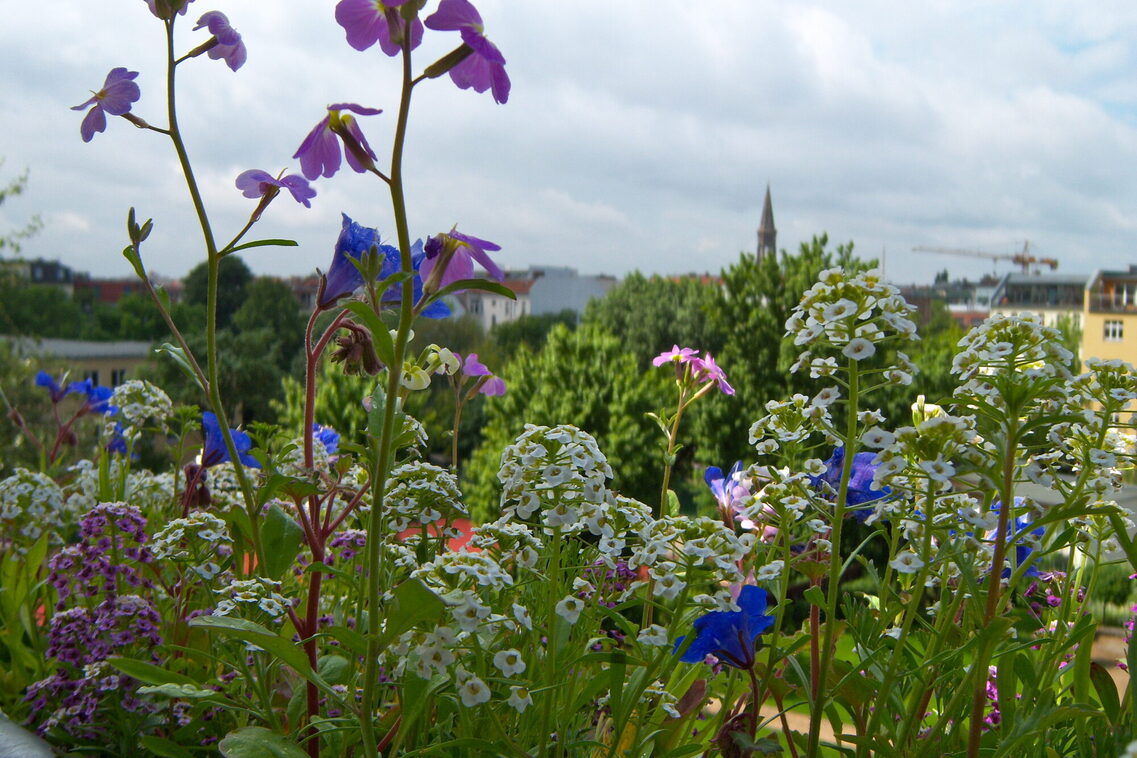
1. choose the right plants
With the right choice of plants, you can lay the foundation for a vibrant balcony.
- Choose native plants that bloom from spring to fall. This will provide insects with a continuous source of food—and birds with seeds and fruits well into winter. Suitable plants are available online, as well as in many nurseries and garden centers. Ask specifically for plants from your region.
- Lavender, forget-me-nots, and bellflowers are bee-friendly, for example. Classic plants such as geraniums and busy Lizzie, on the other hand, do not provide any food.
- Choose varieties with single flowers. Flowers with many petals make it difficult for insects to access the nectar.
- If you want to attract butterflies in particular, plant blue cushion and wallflower for the moths, and mallow, colorful crown vetch, or common horn clover for their caterpillars.
- Kitchen herbs don't just taste good to us—their flowers also attract bees, bumblebees, and butterflies.
- Pay attention to the conditions on your balcony—sunny, shady, or windy—and choose plants that are suited to the location.
- Plants grown locally save on transport.
2. create living space
In addition to food, animals also need water, nesting opportunities, and an environment that is as undisturbed as possible.
- With native plants, nesting aids, and a shallow water bowl, you can help insects and birds—and get help with pest control at the same time.
- Avoid using pesticides. Chemical preparations pollute the environment with their often difficult-to-degrade ingredients. In addition, they often harm not only pests but also other animals. Instead, use home remedies such as nettle manure or soft soap solution.
- Only turn on balcony lighting when necessary. Insects orient themselves by moonlight—permanently bright lamps disrupt their day-night rhythm. Light bulbs without blue and UV components and with a warm white or amber light color are recommended. Downward-facing lighting also reduces disruption.
3. consciously select materials
You can also make sustainable choices when it comes to soil, planters, and furniture.
- Use peat-free soil to protect the moors. These species-rich habitats store large amounts of carbon dioxide and make an important contribution to climate protection.
- Opt for durable flower boxes made of clay, wood, natural stone, or fiber cement. Plastic products usually end up in the trash after just a few years because they fade and become brittle when exposed to sun, wind, and weather.
- Look for sustainable materials when buying balcony furniture. For wooden products, labels such as FSC or Naturland provide guidance on origin and responsible management.
Even a small balcony can make a big difference to biodiversity right on your doorstep. With a natural design, you can provide food and shelter—and bring a piece of nature right into your home.
Further information
Documents
Contact us
Environmental store
Address
65185 Wiesbaden
Postal address
65029 Wiesbaden
Arrival
Notes on public transport
Public transportation: Luisenplatz stop.
Telephone
- +49 611 313600
- +49 611 313957
Opening hours
- Monday, Tuesday, Friday Saturday: 10 a.m. to 2 p.m.
- Wednesday, Thursday: 1 to 6 p.m.