Board of Trustees Carol Nachman Prize
The Board of Trustees of the Carol Nachman Prize consists of at least eight members.
The Board of Trustees consists of at least eight members. These are two representatives of the state capital of Wiesbaden, including the first operations manager TriWiCon as managing director of the board of trustees, the respective president of the German Society for Rheumatology, a member of the scientific advisory board of the German Society for Rheumatology, a scientist from the Department of Rheumatology at the University of Mainz, a scientist from the Dr. Horst Schmidt Clinics, a representative of a European national society for rheumatology and a head physician from the rheumatology rehabilitation clinics located in Wiesbaden. An honorary chairman may also be appointed by the city council.
Honorary Chairwoman Professor Dr. med. Elisabeth Märker-Hermann

At the end of July 2024, the City Council appointed Professor Elisabeth Märker-Hermann as Honorary Chair of the Board of Trustees of the Carol Nachman Prize. Elisabeth Märker-Hermann previously served as spokesperson for the Board of Trustees of the Carol Nachman Prize until July 2024. She studied medicine in Mainz, earned her doctorate in 1984, and completed her residency in internal medicine, rheumatology, and nephrology in Bad Kreuznach, Basel, and Mainz. After completing her habilitation at the University Medical Center Mainz in 1993, she served as a senior physician at the First Department of Internal Medicine there and, in 1998, as a visiting professor at Harvard Medical School in Boston.
Her research focuses on inflammatory rheumatic diseases and vasculitides, as well as the interactions between genetics, the environment, and immune processes. Her research has been recognized with several scientific awards. From 2002 through the end of 2024, she headed the Department of Internal Medicine IV in Wiesbaden — Rheumatology, Clinical Immunology, and Nephrology — at Helios Dr. Horst Schmidt Kliniken GmbH in Wiesbaden; since 2025, she has been working in the Outpatient Clinic for Internal Medicine and Rheumatology at the DKD Helios Clinic in Wiesbaden.
Professor Märker-Hermann served as president of the German Society for Rheumatology and Clinical Immunology (DGRh) from 2004 to 2006 and as chair of the German Society for Internal Medicine (DGIM) in 2012–2013; she serves on numerous scientific committees and foundations. She received the Robert Koch Award in 1995, the Dr. Franziskus Blondel Medal from the City of Aachen in 2011, the Leopold Lichtwitz Medal from the DGIM in 2022, and the Wiesbaden Lily; as well as honorary membership in the DGIM in 2025 and honorary membership in the DGRh in 2026.
Chairman University Professor Dr. med. Andreas Schwarting
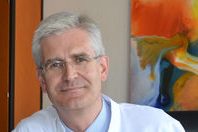
Professor Andreas Schwarting studied human medicine in Bonn, Stockholm and Uppsala. He completed his doctorate in 1991 in the neurochemical laboratory at the University of Bonn. He trained as a specialist in internal medicine, nephrology and rheumatology at the I. Medical Clinic and Polyclinic of the University Medical Center Mainz, where he has worked as a senior physician since 2001. During research stays at Brigham and Women's Hospital and the Harvard Institutes of Medicine, Boston, from 1996 to 1999, he worked on the pathophysiology of systemic lupus erythematosus. Habilitation in 2001. 2006 appointment to the W2 professorship for clinical immunology and rheumatology as head of the rheumatology focus at the University Medical Center Mainz. Since 2006, he has also been Medical Director of the ACURA Rheumakliniken Rheinland-Pfalz GmbH in Bad Kreuznach with a specialist hospital for acute rheumatology and a rheumatological-orthopaedic rehabilitation clinic.
He focuses on experimental and translational research into systemic autoimmune diseases as well as care research projects to improve rheumatology care (including ADAPTHERA, EU Interregio projects Lupusbiobank Oberrhein and RARENET). Professor Schwarting has set up a lupus center in Mainz with currently over 650 SLE patients and initiated a care project in Rhineland-Palatinate, Lower Saxony and Saarland, which improves the early diagnosis of inflammatory rheumatic diseases such as rheumatoid arthritis, psoriatic arthritis and spondyloarthritis ("Rheuma-VOR").
Professor Schwarting has been spokesperson for the Rhineland-Palatinate Rheumatology Working Group since 2006 and is Chairman of the cooperating regional Rheumatology Center Mainz-Bad Kreuznach. Since 2018, he has headed the DGRh Rheumatology Center Rhineland-Palatinate and, as Managing Director, the "University Center for Autoimmunity" at the Mainz University Medical Center.
University Professor Dr. med. Drees
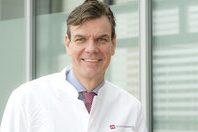
Professor Philipp Drees was born in Stuttgart in 1969 and studied human medicine in Mainz, Hamburg and Frankfurt am Main from 1990 to 1997. In addition to further training as a specialist in orthopaedics and as a specialist in orthopaedics and trauma surgery, Professor Drees has additional qualifications in "Orthopaedic Rheumatology" and "Special Orthopaedic Surgery". Furthermore, Prof. Drees has acquired additional qualifications such as "Osteology" in Mainz and Frankfurt. He has worked as a doctor and researcher in Frankfurt, Mainz and Zurich. After his habilitation in 2008, he was Clinic Director at the Center for Trauma Surgery and Orthopaedics at the Mittelrhein Foundation Clinic in Koblenz from 2010 to 2014. In 2014, he accepted the appointment to the W3 professorship and Head of Orthopaedics and Rheumatism Orthopaedics and also became Deputy Director of the Center for Orthopaedics and Trauma Surgery at UM. Philipp Drees has been Director of the Center since 2020.
His scientific focus is on the surgical and conservative treatment of inflammatory and degenerative joint diseases, prosthetics and healthcare research. Under his leadership, for example, the "PROMISE" project (PROcess optimization through interdisciplinary and cross-sectoral care using the example of patients with hip and knee endoprostheses), which was funded by the Joint Federal Committee with five million euros, was carried out. The aim of this project was to sustainably improve the quality of surgical care and care processes for artificial joint replacements from a scientific perspective. Prof. Drees also has a high level of expertise in the diagnosis and treatment of metabolic bone diseases and geriatric medicine.
In 2019, he was President of the Association of Southern German Orthopaedic Surgeons and Trauma Surgeons and is Deputy Chairman of the Rhineland-Palatinate Rheumatology Working Group and Rheumatology Center. Within the UM, he holds numerous offices in medical and academic self-administration.
Professor Philipp Drees is Deputy Chairman of the University Council of Johannes Gutenberg University. The University Council is the university's supervisory board. He is also Chairman of the Board of the Landeskonferenz der Ärztlichen Direktoren/Leiter der Kliniken, Instituts und Abteilungen der Universitäten im Land Rheinland-Pfalz e.V..
Professor Désirée van der Heijde
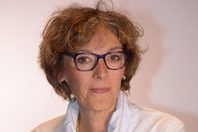
Professor Désirée van der Heijde studied medicine at the Catholic University in Nijmegen, the Netherlands. She obtained her doctorate in 1991 and became a board-certified rheumatologist in 1993. After a one-year stay in Sweden in 1993, she moved to the Department of Rheumatology at the University Medical Center Maastricht until she took up her current position as Professor of Rheumatology at Leiden University Medical Center in 2007. Since 2007 she has also been affiliated with the Diakonhjemmet Hospital in Oslo, Norway.
Her research focuses on outcomes assessment methodology and its application in clinical research. Specific areas of interest are radiographic scoring methods in rheumatoid arthritis, psoriatic arthritis and spondyloarthritis as well as magnetic resonance imaging scoring in spondyloarthritis.
Professor van der Heijde was Chair of the Assessment of SpondyloArthritis international Society (ASAS) from 1995 to 2012. From 2011 to 2019, she was Chair of the EULAR Standing Committee on Clinical Affairs and ACR-EULAR Liaison Officer. She has been Chair of the Executive Committee of FOREUM since 2019. She received the prestigious Carol Nachman Award for her scientific contributions to rheumatology in 2011, the Doctorate honoris causa from the University of Ghent in Belgium in 2012 and the Jan van Breemen Medal in 2017. She is an honorary member of EULAR.
Professor van der Heijde has published more than 850 articles in the international literature, as well as chapters in leading rheumatology textbooks. She is a regular reviewer for all major rheumatology journals and a member of the editorial board of RMD Open. She is also co-editor of the Annals of Rheumatic Diseases.
Professor Dr. med. univ. Georg Schett
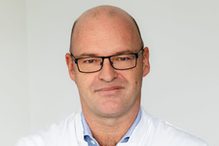
Georg Schett is Professor of Internal Medicine and has been Full Professor of the Medical Clinic 3 - Rheumatology and Immunology at the University Hospital Erlangen, Friedrich-Alexander University Erlangen-Nuremberg in Germany since 2006.
He completed his studies in human medicine at the University of Innsbruck (Austria) in 1994. After completing his doctorate at the Faculty of Medicine, he worked as a scientist at the Institute for Biomedical Aging Research at the Austrian Academy of Sciences in Innsbruck. In 1996, he moved to the Medical Faculty of the University of Vienna, where he first qualified as a specialist in internal medicine and later in rheumatology and immunology. In 2003, he was appointed Professor of Internal Medicine. Before taking up his position as full professor at the Medical Clinic 3 in Erlangen, he spent a year working as a scientist in the United States.
Georg Schett's scientific work has always focused on clinical-immunological issues, in particular the molecular basis of immunological-inflammatory diseases. Initially, he researched the immunology of atherosclerosis, in particular antibody-mediated endothelial cell damage. Since 2006, he has devoted himself to rheumatological-immunological issues and was able to clarify the cause of the LE cell phenomenon in 2007. He received the prestigious START Award in 2002 and founded a research group for arthritis in Vienna. In 2008, together with colleagues, he initiated the IMMUNOBONE priority program in Germany, funded by the German Research Foundation (DFG). IMMUNOBONE aims to elucidate the interactions between the skeleton and the immune system. Professor Schett has headed the DFG Collaborative Research Center 1181 "Checkpoints for Resolution of Inflammation" in Erlangen since 2015. He is also the spokesperson for the METARTHROS project funded by the German Federal Ministry of Education and Research, which is investigating the effects of metabolism on arthritis. He recently received funding for the ERC Synergy grant "4D+ nanoSCOPE Advancing osteoporosis medicine by observing bone microstructure and remodeling using a four-dimensional nanoscope", of which he is the spokesperson. 4D nanoSCOPE aims to develop tools and techniques that enable time-resolved imaging and characterization of bone in three spatial dimensions (both in vitro and in vivo), enabling the monitoring of bone remodeling and revolutionizing the understanding of bone morphology and its function.
In 2021, Prof. Schett was appointed Vice President for Research at the Friedrich-Alexander-University Erlangen-Nuremberg and became a Leopoldina member of the National Academy of Sciences.
His work has been recognized with numerous awards, including the Carol Nachman Prize of the City of Wiesbaden. In March 2023, Prof. Schett received the "Förderpreis 2023 im Gottfried Wilhelm Leibniz-Programm" awarded by the DFG. He has published over 1050 peer-reviewed papers.
Professor Cem Gabay, M.D.

Full Professor, Departments of Internal Medicine and Pathology and Immunology, Faculty of Medicine, University of Geneva (UNIGE)
Cem Gabay completed his medical training in Geneva, earning his medical degree in 1985 and his Doctor of Medicine degree in 1991. He specialized in Internal Medicine and Rheumatology and spent several years in the United States at the University of Colorado School of Medicine before returning to Geneva in 1999. In 2001, he was appointed head of the Department of Rheumatology at the Geneva University Hospitals (HUG) and associate professor; since 2008, he has been a full professor at the Faculty of Medicine at the University of Geneva (UNIGE). From 2013 to 2019, he also served as head of the Department of Internal Medicine. From 2019 to 2023, he was dean of the UNIGE School of Medicine and director of education and research at the HUG.
In addition to these leadership roles, Cem Gabay has pursued an active and distinguished career in both clinical practice and basic research in the field of inflammation. He is the author of more than 550 scientific publications. His research focuses on cytokine biology, particularly cytokines of the interleukin-1 (IL-1) family, utilizing a wide range of experimental models for inflammatory diseases. He is also an internationally recognized expert on rheumatoid arthritis and has led several clinical trials evaluating biologic therapies in patients with inflammatory rheumatic diseases.
Together with the research groups he leads, Professor Gabay has received numerous prestigious awards, including the Research Prize of the Swiss Society for Rheumatology in 1992, 1998, and 2000, as well as the Herbert Tabor Prize from the International Interferon and Cytokine Society in 2011. His research has been continuously funded by the Swiss National Science Foundation for more than 20 years, and from 2015 to July 2019, he served as a member of the Foundation’s National Research Council. He also served as president of the Swiss Society for Rheumatology for four years. He is currently a member of the MD-PhD Committee of the Swiss Academy of Medical Sciences.
Translated with DeepL.com (free version)
