Friday - let us be enchanted by the Belle Epoque charm
First, check in at the hotel (opens in a new tab), drop off your bags, and kick off your Wiesbaden weekend with a delicious lunch! Chez Mami (opens in a new tab) treats you to French cuisine in Parisian bistro style on white tablecloths, the cozy Hindukusch (opens in a new tab) serves authentic Afghan cuisine, and Karim’s Brasserie (opens in a new tab) takes you to Morocco with tagine, falafel, and couscous.
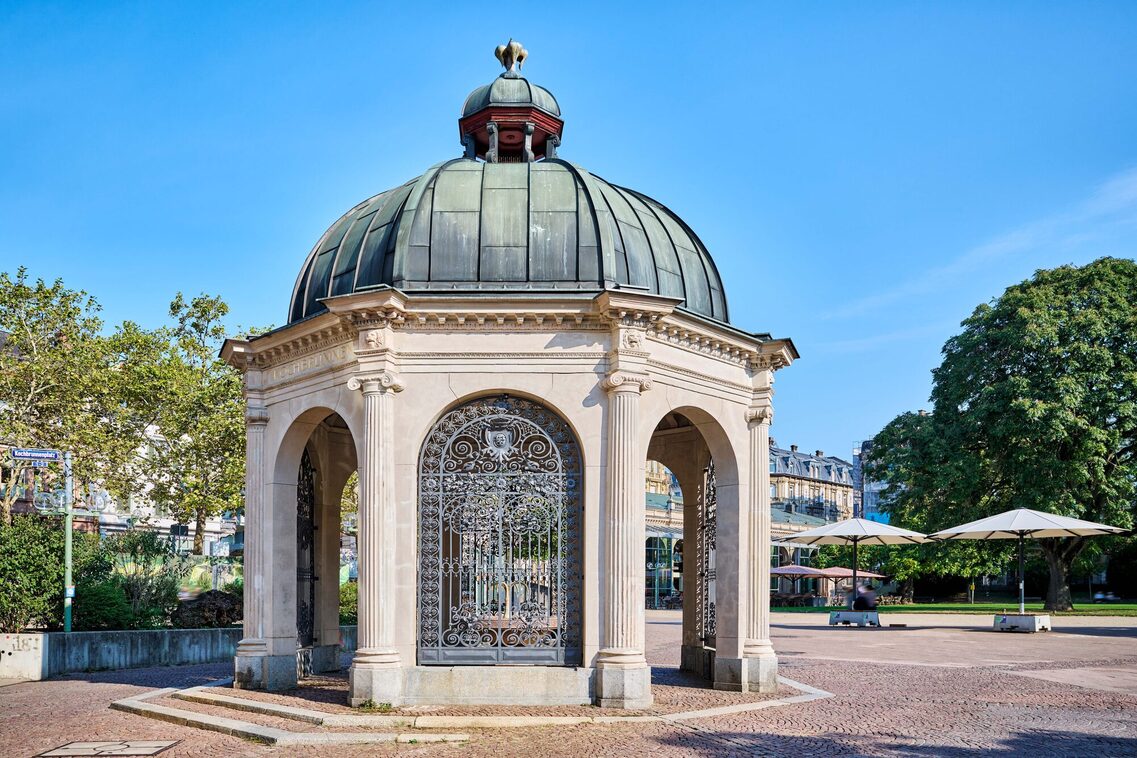
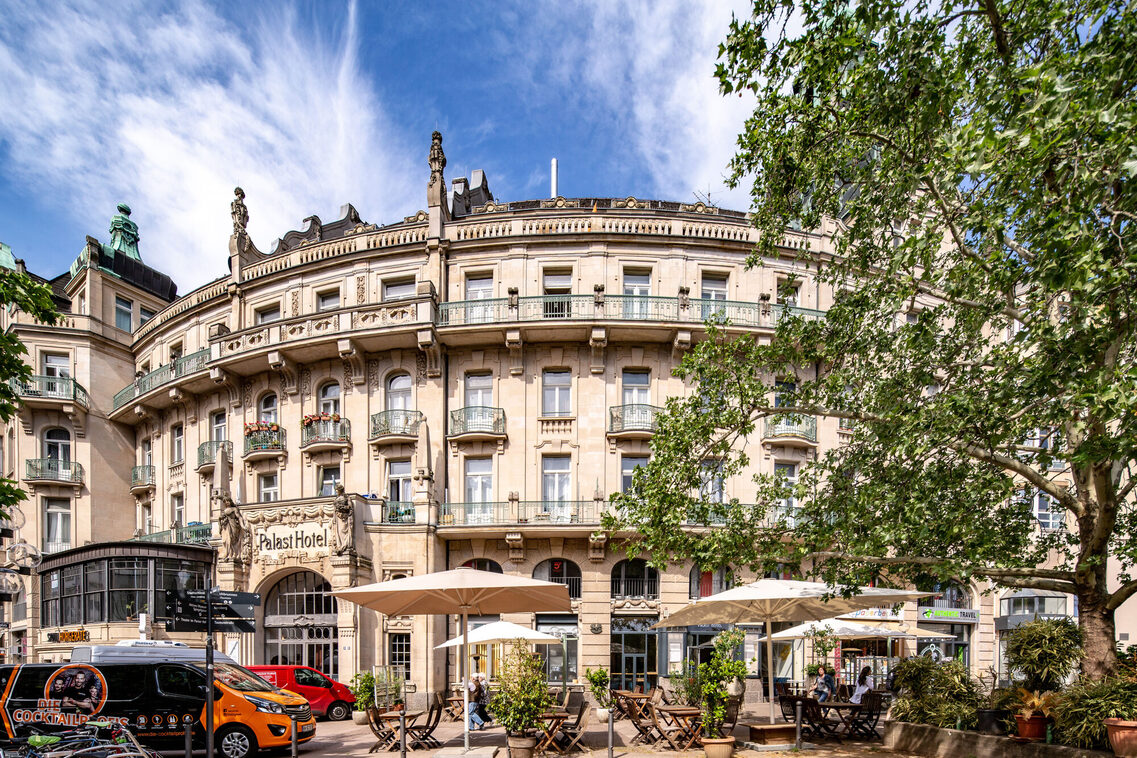
The first stop is the Kochbrunnen on the square of the same name—the most famous and, at 66 degrees Celsius, the hottest of the city’s 26 thermal springs. The spring’s sodium-chloride water tastes salty and takes some getting used to, but is said to have healing effects on skin conditions, rheumatic ailments, or musculoskeletal issues. By the way, in the 19th century, Kochbrunnenplatz was a vibrant hub of the spa town—featuring an elegant promenade and drinking hall, as well as luxurious grand hotels like the “Schwarzer Bock” or the “Palast-Hotel,” our next stop.
Even today, the Palast-Hotel, with its elegant Belle Époque style, curved façade, and Art Nouveau elements, is a real eye-catcher. In the inner courtyard—which you can take a look at—a pavilion-like winter garden with a terrace, fountain, and Art Nouveau glasswork recalls its glorious past. Illustrious guests such as tenor Enrico Caruso have stayed here. Today, the building, constructed in 1902, houses apartments (which served as public housing in the 1970s), offices, and the kuenstlerhaus43 (opens in a new tab) cabaret theater, which is always worth a visit!
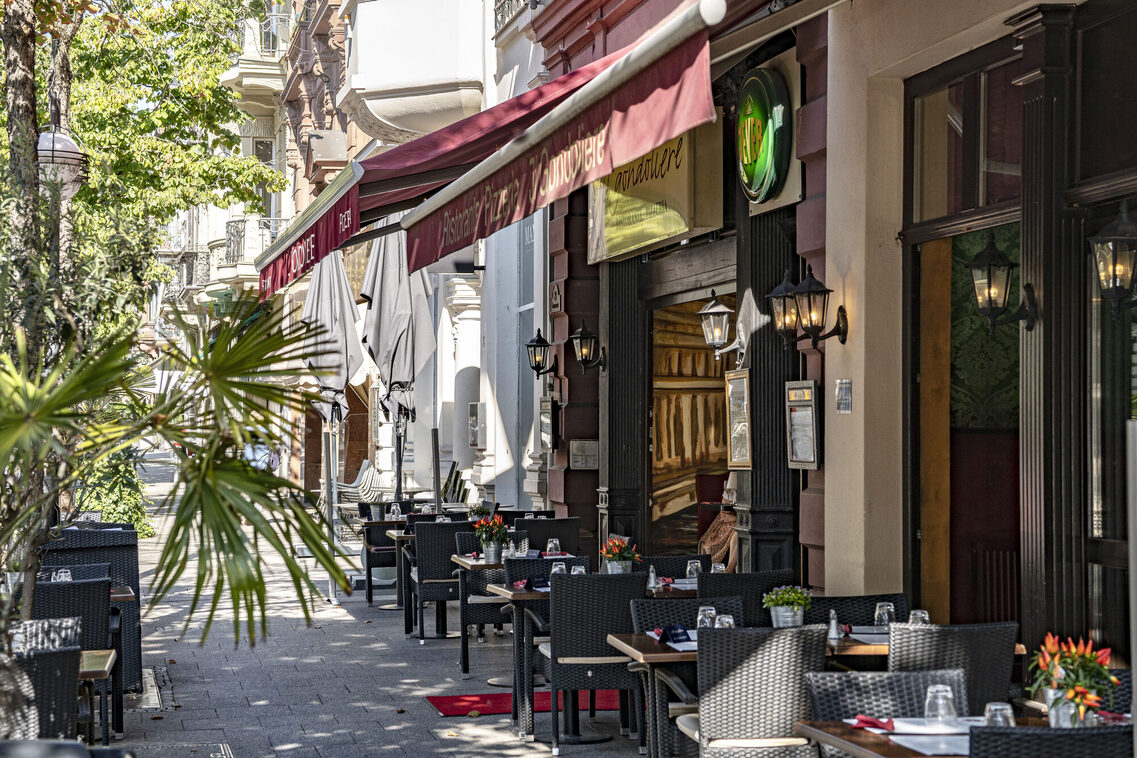
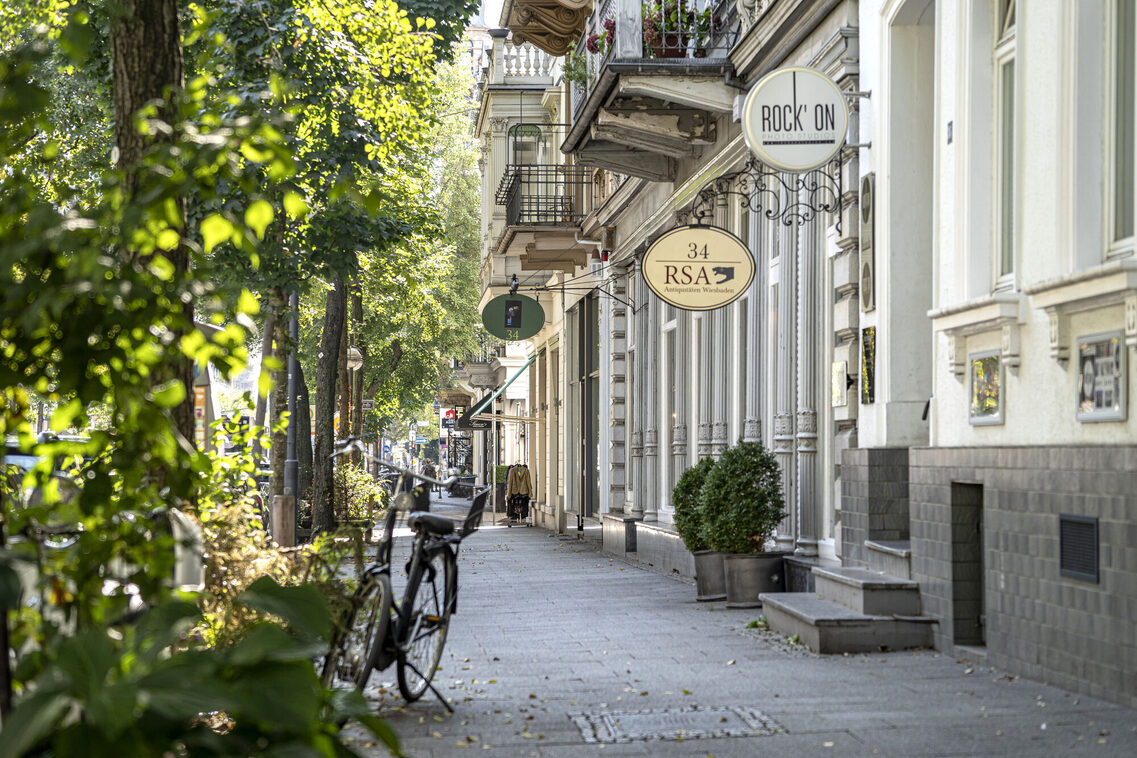
We continue on to the elegant Taunusstraße—one of the city’s best-preserved streets. Because Taunusstraße attracted many spa guests due to its central location, numerous hotels were built here. Today, one antique shop follows another, and there are many restaurants and charming bars. The Taunusstraße Festival, celebrated annually in August, is very popular.
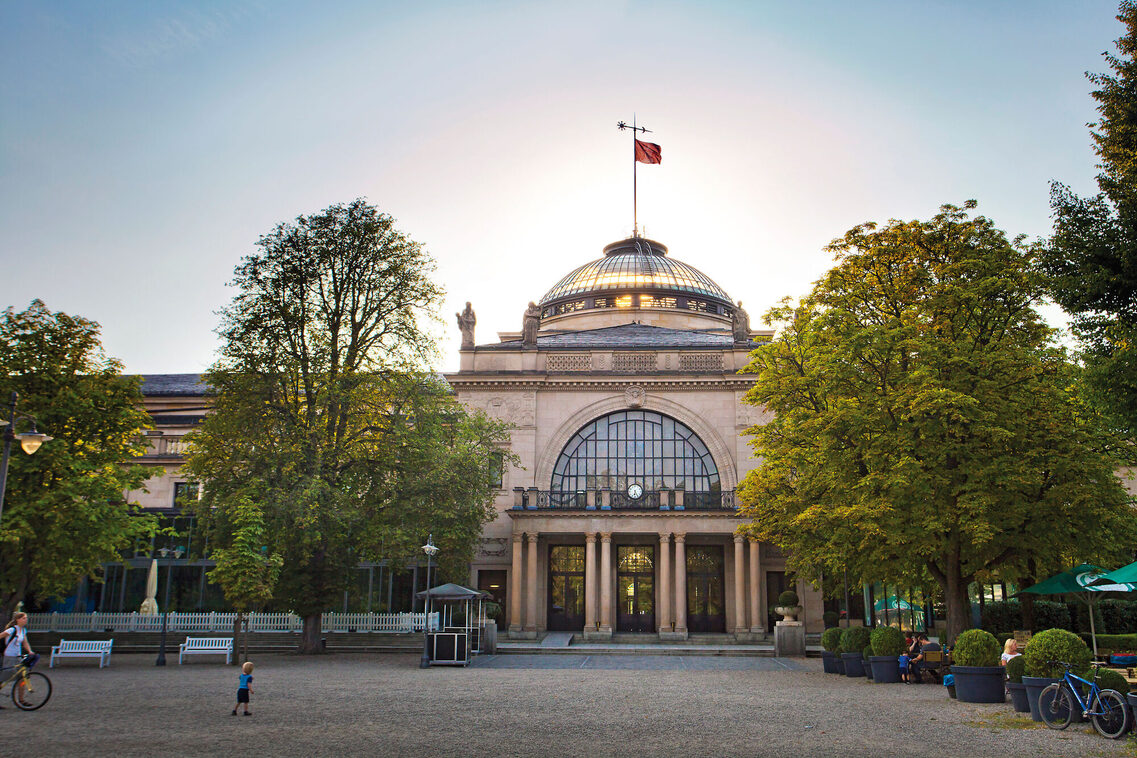
Let’s continue strolling to the Kurhaus, Wiesbaden’s landmark! This imposing building was constructed on the initiative of Emperor Wilhelm II, who often stayed here for spa treatments. It opened in 1907. The inscription “AQUIS MATTIACIS” on the portico—meaning “the waters of the Mattiaci”—commemorates the Germanic tribe of the Mattiaci, who already made use of the hot springs.
In the elegant foyer, which is open to the public, life-size copies of ancient Greek deities stand beneath the 21-meter-high dome, in front of the four wall pillars, symbolizing various virtues:
Athena – goddess of wisdom, with helmet and spear
; Eirene with the boy Pluto – representative of peace and wealth, with a cornucopia
; Apollo – patron god of the arts, with a harp;
Aesculapius – god of medicine and health
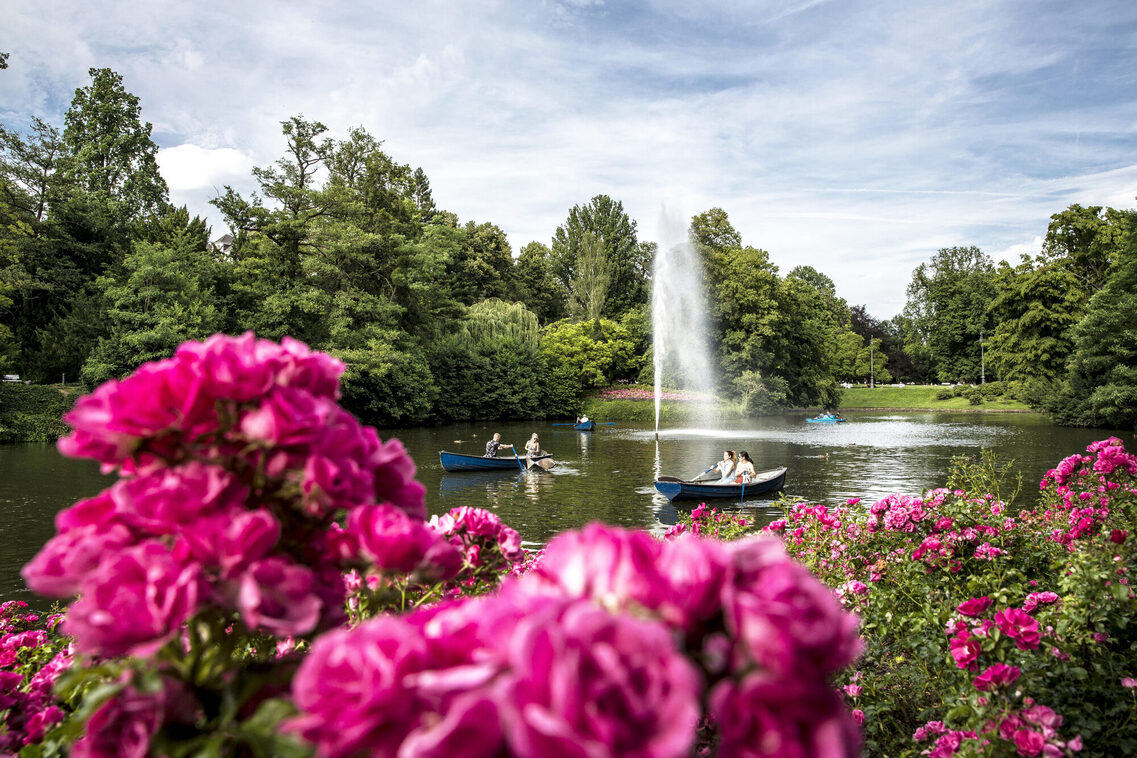
In addition, the Kurhaus features beautiful halls such as the Friedrich-von-Thiersch Hall, named after the building’s architect, where concerts are held, and the Muschelsaal, which can be visited during guided tours (opens in a new tab). The Kurhaus also houses the Wiesbaden Casino (opens in a new tab)—one of the most beautiful and oldest in Europe. It is said that the writer Dostoyevsky ruined himself playing roulette here, which inspired his novel *The Gambler*. His bust stands in the Kurpark, which adjoins the Kurhaus directly. It’s a wonderful place to stroll and row a boat on the Kurpark pond!
After a break at the hotel, we’ll kick off the afternoon and head straight into the evening—Nerostraße in the popular Bergkirchen district is the perfect spot for it! If you’re in the mood for really good coffee and maybe some cake, Dales Cake (opens in a new tab), THE FRIDAY Cupping Room, (opens in a new tab) or the KAUFMANNS coffee roastery (opens in a new tab) just around the corner are the places to go. Be sure to stop by Pottery & Gallery Ile 22 (opens in a new tab)—you’ll find beautiful Wiesbaden souvenirs here! Hand-selected wines and charming little trinkets are available right next door at the Nero22 wine bar (opens in a new tab). You can get great pizza at Pizzeria De Paola (opens in a new tab), and if you’re in the mood for hearty Hessian cuisine in an authentic atmosphere, Kortheuer (opens in a new tab) is the place to go. Also nice: Bistro Filou (opens in a new tab) with Mediterranean cuisine—holiday vibes included!