On the road in ... Valhalla
Opened in 1897 as a variety theater in what is now the historic “Fünfeck”—at the corner of Mauritiusstrasse and Hochstättenstraße—the Walhalla looks back on a long history. It is scheduled to reopen in 2030 following extensive renovations. Together with project manager Vanessa Remy, we take a look back at the past and into the future!
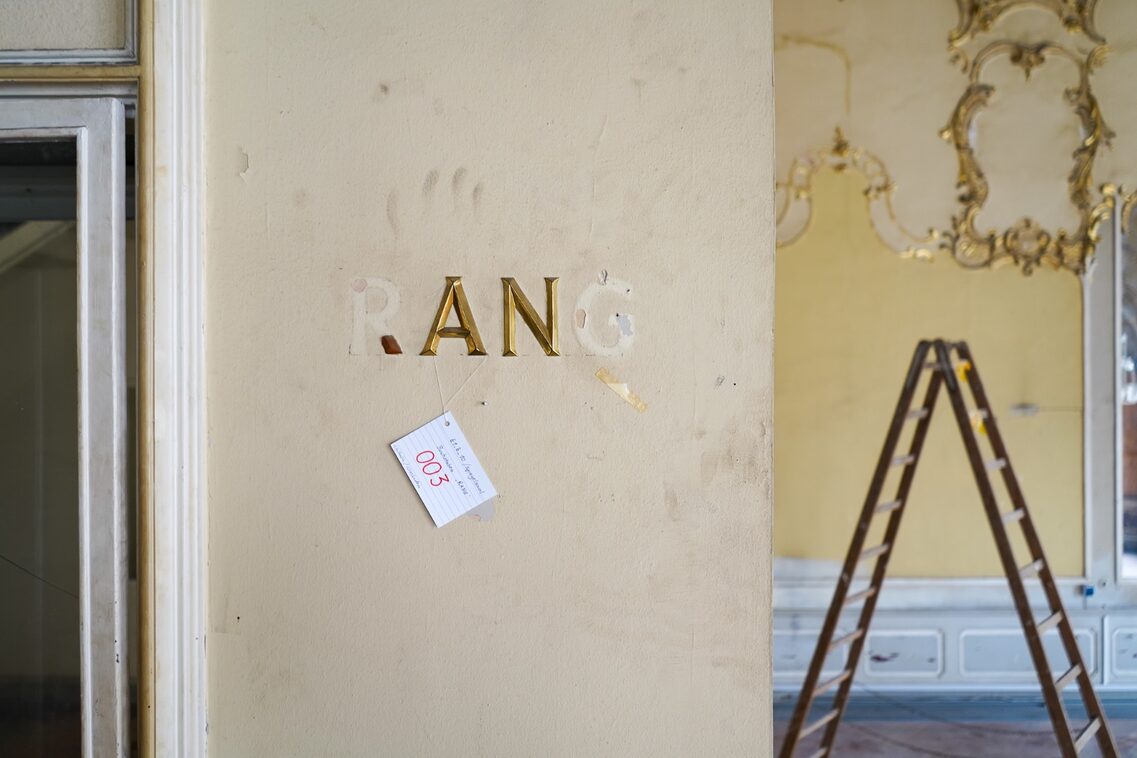
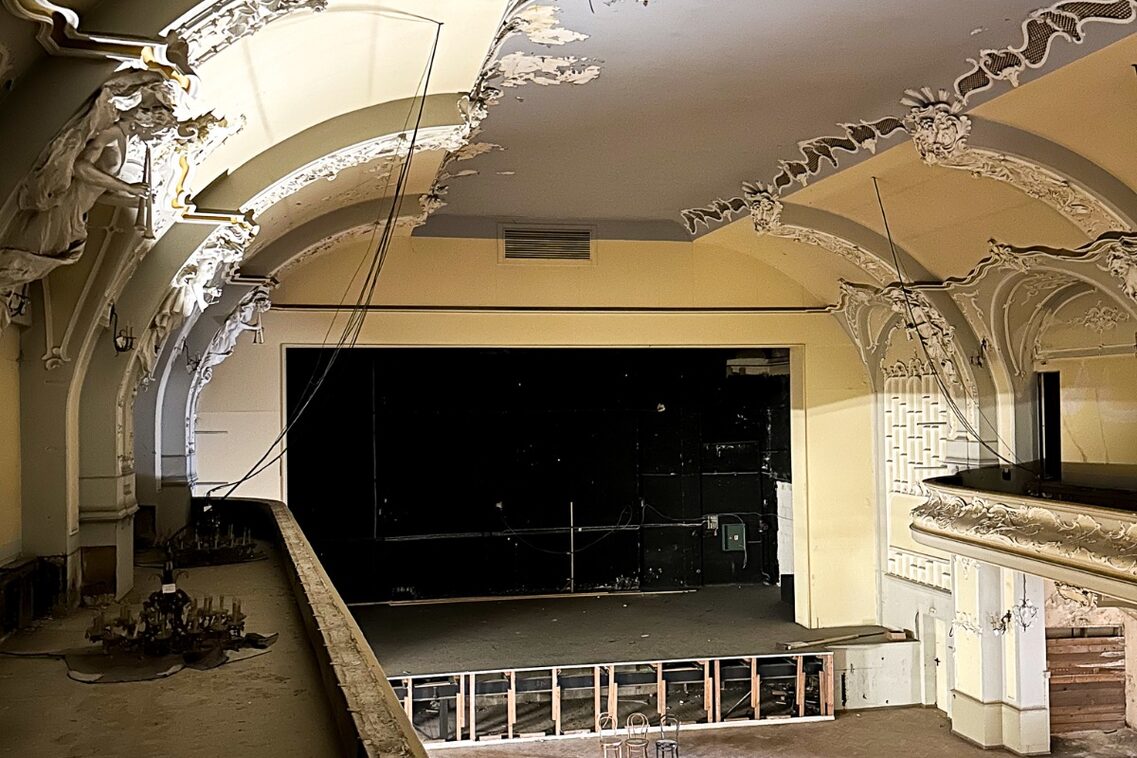
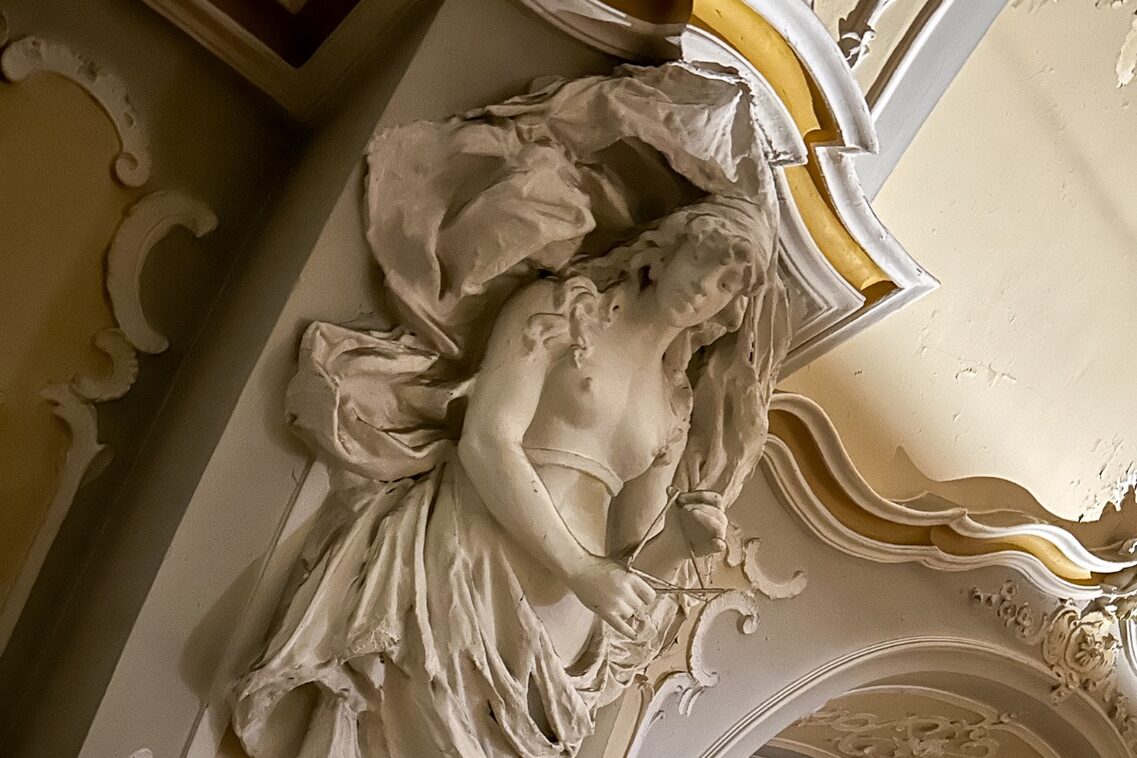
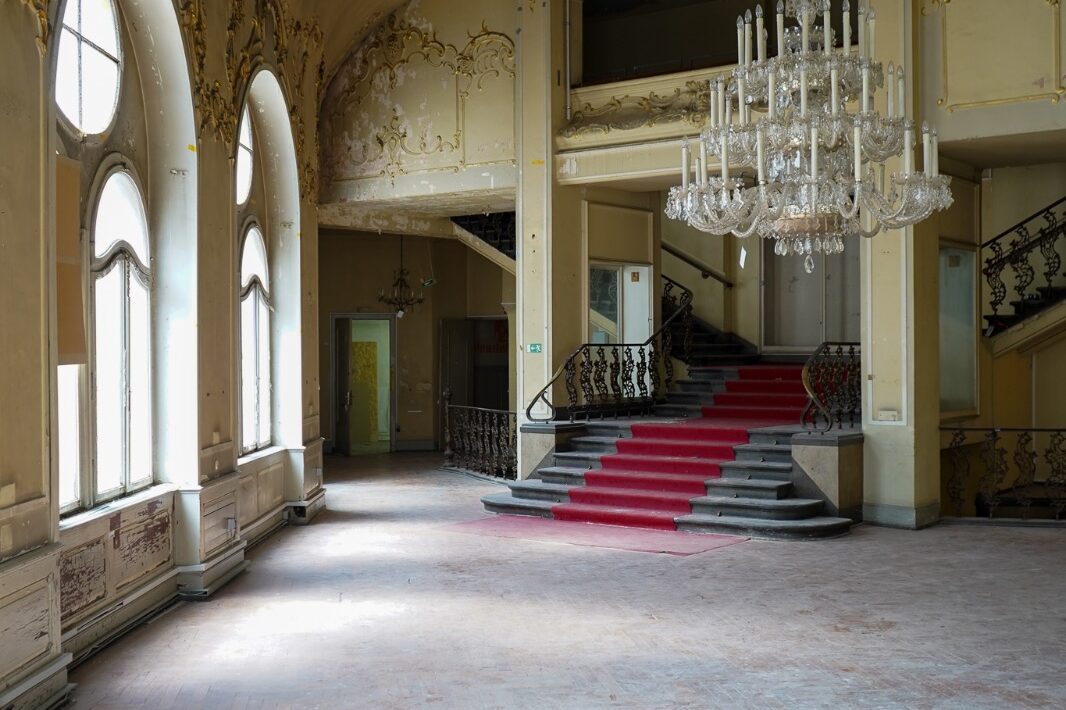
What's the story behind the name "Walhalla"?
Vanessa: In Norse mythology, the term means "Hall of the Slain." It was believed that those who fell in battle gathered at this mythical place, which is ruled by Odin, the father of the gods. Around 1900, variety shows and popular theaters began to be called “Walhalla,” partly as a parody alluding to the mythological hall of fame.
Not every city has such a unique and formative cultural venue.
Why is it worth renovating the Walhalla?

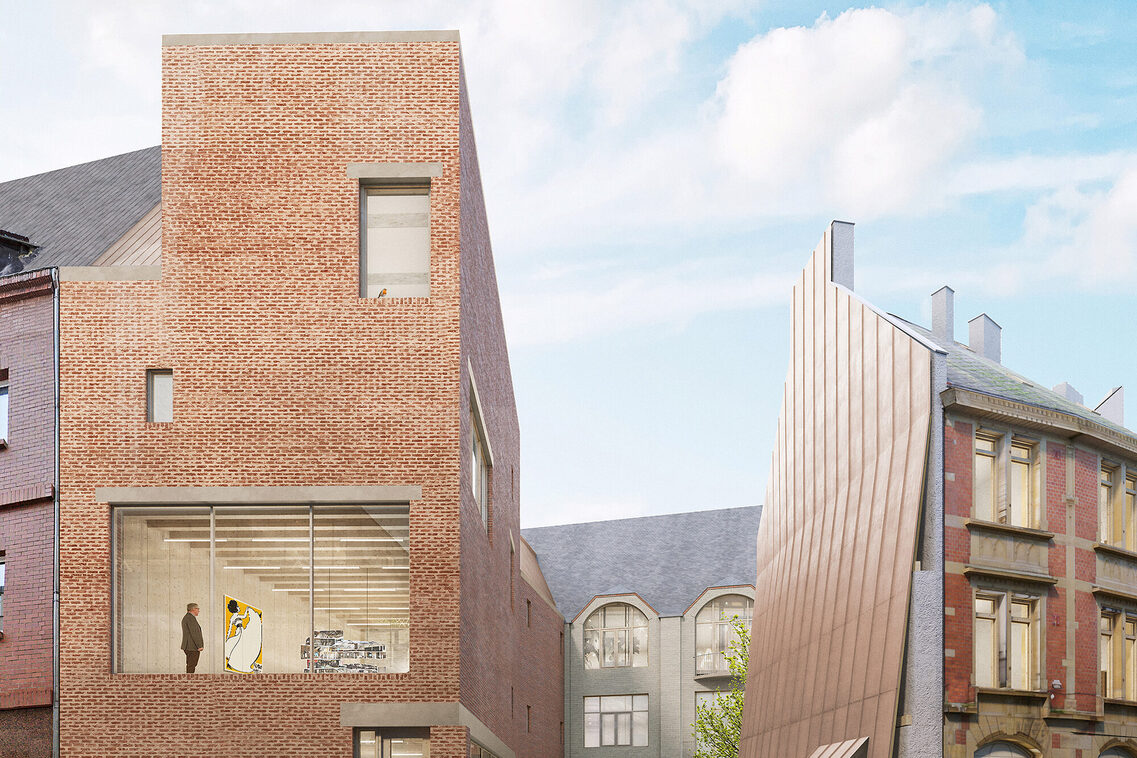
Vanessa: Architecture shapes the atmosphere and influences the quality of life. Thanks to its exceptionally well-preserved Historicist architecture, Wiesbaden has a style all its own. The Walhalla, a designated cultural monument, is part of this uniqueness, part of this defining cityscape, and part of the lives of many residents of Wiesbaden—and thus part of the ongoing history of the state capital, Wiesbaden. Not every city has such a unique and defining cultural venue. Through this cultural and architectural development project, we are transforming the Walhalla from its historical context of use into a future cultural venue that meets all the requirements our society places on cultural venues and their use today. That is why the renovation is worthwhile in two ways: We are preserving a unique historic building, bringing it up to current technical standards, and thereby enabling its revitalization through a contemporary programmatic approach that will appeal to the entire urban community.
What is the current status (June 2026)?
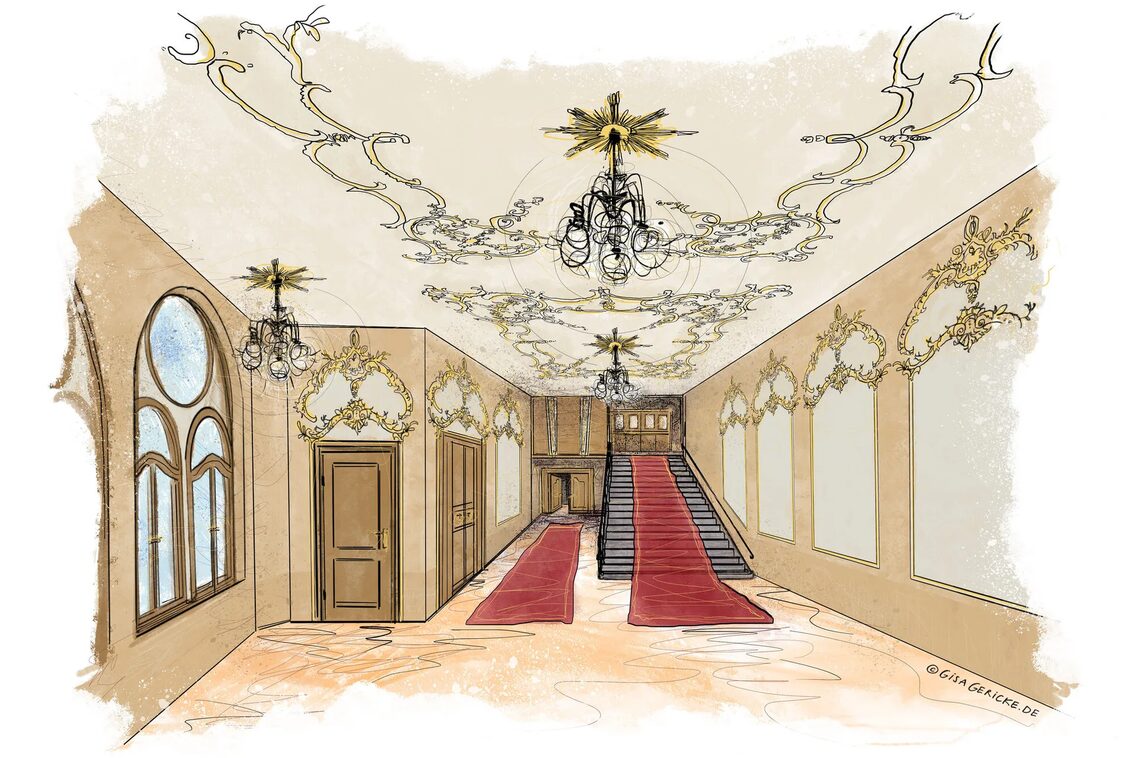
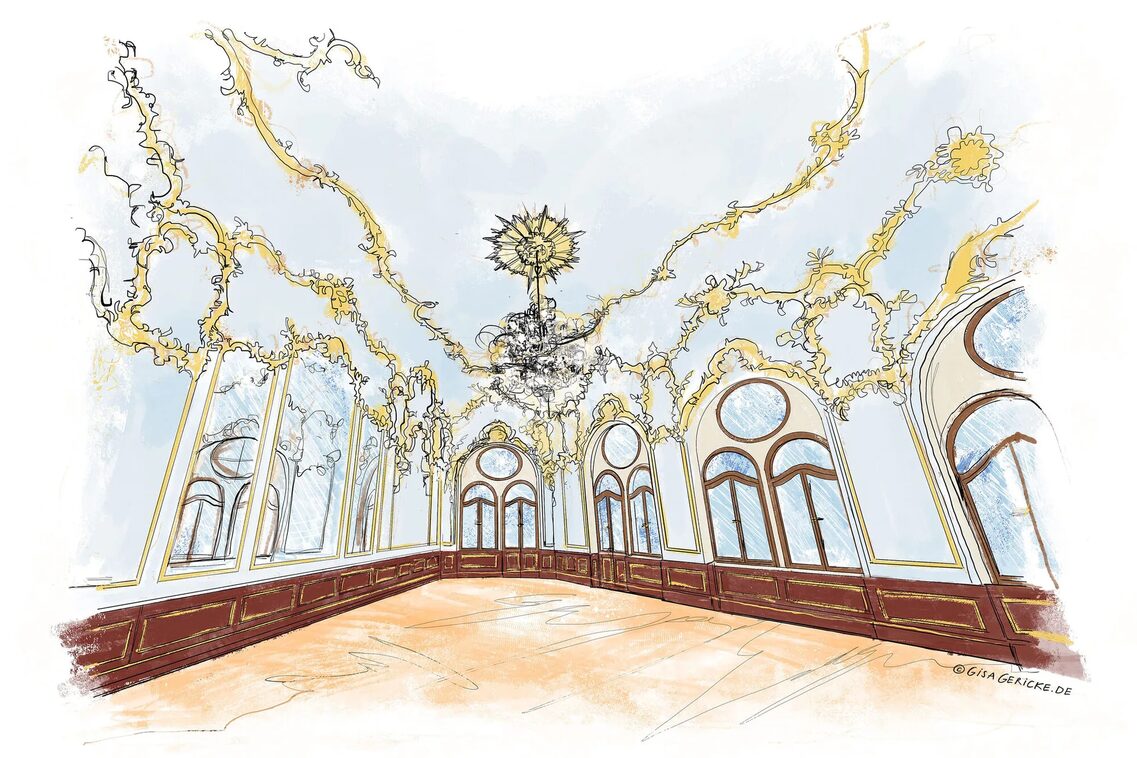
Vanessa: A hazardous materials cleanup is currently underway at the Walhalla. All contaminated materials are being removed and disposed of properly. The restorers have mapped out all the damage and have begun removing the emulsion paint from the 1970s in the Hall of Mirrors. This paint seals the walls, which is rather undesirable for a building in Wiesbaden, a city known for its mineral springs. Moisture must be able to diffuse out of the walls so that the masonry remains dry. And in July, one of the side aisles along the ballroom will be demolished. The goal is to determine whether, in addition to the historic gables, any other remnants of the historic façade have survived, which in turn could serve as a guide for the design of the new façades. We’ll celebrate this progress on September 15 during the Walhalla Action Day (opens in a new tab), which will take place around the Walhalla and at the Mauritius Media Library.
Rheinischer Kurier on the occasion of the opening in 1897Crowds of people had been flocking to see the new marvel since the morning of yesterday.
What was an evening at the Walhalla like in the 19th century?
Vanessa: I’ll quote from the article in the Rheinischer Kurier that appeared on the occasion of the opening on September 17, 1897: “Ever since yesterday morning, crowds of people had been flocking here to see the newly built marvel. [...] By 8 o’clock, the lower hall was full, and shortly thereafter there wasn’t a single empty seat left—not on the balcony nor in the boxes—it was sold out. [...] A few minutes past 8 o’clock, the house orchestra, conducted by the bandmaster Mr. Zimmer, struck up the Walhalla Festival March [...] The first to appear on stage was Miss Emilie Robert as a concert singer. Encouraged by the lively cheers, the young lady performed three songs with a captivating, pleasantly moving voice.” The article is actually much more extensive, and I recommend a visit to the city archives, where additional documents provide insight into the program around 1900. By the way, I’m still searching for the sheet music for this “Walhalla Festmarsch,” which Bandmaster Zimmer composed for the theater. It would be wonderful to be able to play it at the reopening in 2030! I’d be grateful for any tips.
On April 18, 1946, the Jewish community celebrated Passover in Valhalla, a story that really moved me!
How has usage changed over the years?
Vanessa: One of the first steps in developing my usage concept (opens in a new tab) was to trace the history of the building and its various functions from 1897 until its closure in 2017.
- It began with variety shows and theater productions, which also included operetta performances, such as those by the Jewish Wiesbaden composer Heinz Lewin (opens in a new tab), who was murdered in the Shoah. On April 18, 1946, the Jewish community celebrated Passover at the Walhalla—a story that deeply moved me when Steve Landau submitted it as part of my project “My Walhalla Story.”
- With the opening of the Bambikino, films were no longer shown only in the ballroom but also in the basement.
- In the 1950s, the Walhalla was owned by a chef from Upper Bavaria; accordingly, it featured a Bavarian-style restaurant complete with a bowling alley in the basement.
- There’s a record of an Elvis performance here, and the jazz scene used to gather here. My uncle DJ’d at the Big Apple, which opened in 1975, and the State Theater used the venue as a temporary performance space—a logistically challenging endeavor, since the Walhalla lacked sufficient space to accommodate an ensemble’s operations, including workshops. There is a lively correspondence between Mr. Janowsky, the managing artistic director at the time—who, incidentally, also signed my debut contract at the Wiesbaden State Theater back then—and the then-head of the cultural affairs department, Margarete Goldmann, which can also be found in the city archives.
- With Sigrid Skoetz at the helm, the Walhalla was revitalized and taken over by the Walhalla-Theater Association starting in 2001.
- In 2017, the theater had to close for fire safety reasons.
The opening is planned for 2030. The aim is for the building to be professionally renovated and fully functional at the same time.
What are some specific challenges?
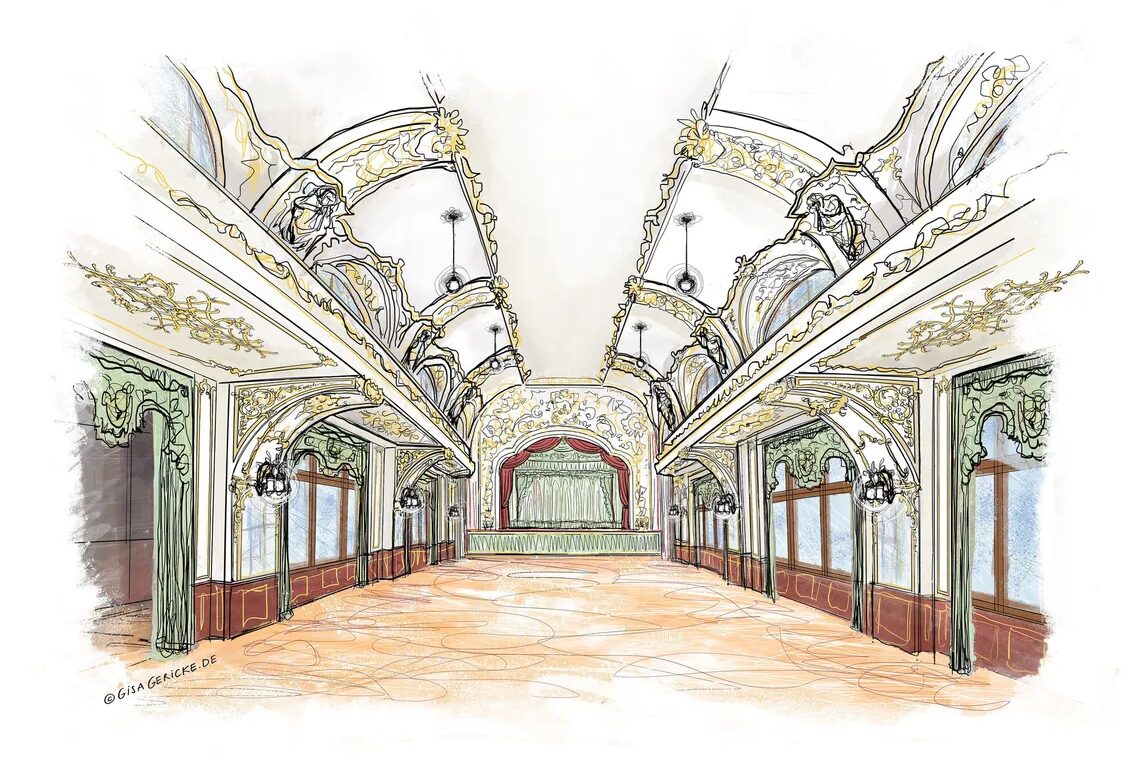
Vanessa: The opening is scheduled for 2030. If I take stage and event technology planning as an example, the task here isn’t simply to hang new spotlights from an existing mount and plug them in—that’s not an option—but rather to work together with technical planners, historic preservation officials, architects, the SEG, and other stakeholders to determine where, in the ballroom—despite the wire mesh ceiling and stucco—the equipment can be positioned so that the audience can see the stage later on and the audio system can contribute to a good listening experience. And how can the load—that is, the weight of the equipment—be supported? That’s where the structural engineer comes in. Small, incremental steps are worked out by many experts, and thanks to the project structure—which brings together the relevant parties in committees and working groups—we’re moving forward step by step with careful planning. The goal is for the building to be professionally renovated and, at the same time, fully functional. And then, with a renovation of an existing building, there are always surprises—including good ones! For example, it was just discovered that the historic stage portal has been preserved, at least in part, behind some cladding. Now it’s being uncovered piece by piece, and the space is gaining an additional dimension.
With this diverse program, the Walhalla will be the answer to the question: How can the necessary transformation, how can the revitalization of our inner city succeed?
How should the Walhalla be used in the future?
Vanessa: In its manifesto, the Cultural Advisory Board explicitly expressed the desire that all art forms be included in the program. Now, the Walhalla offers a wide variety of spaces, both in terms of atmosphere and capacity, and these are ideal conditions for a festival venue that will encompass all art forms. Events such as dance, theater, performance art, concerts, exhibitions, and readings are planned. The Walhalla will serve both as a host venue with its own festival formats and as one of many venues for existing festivals.
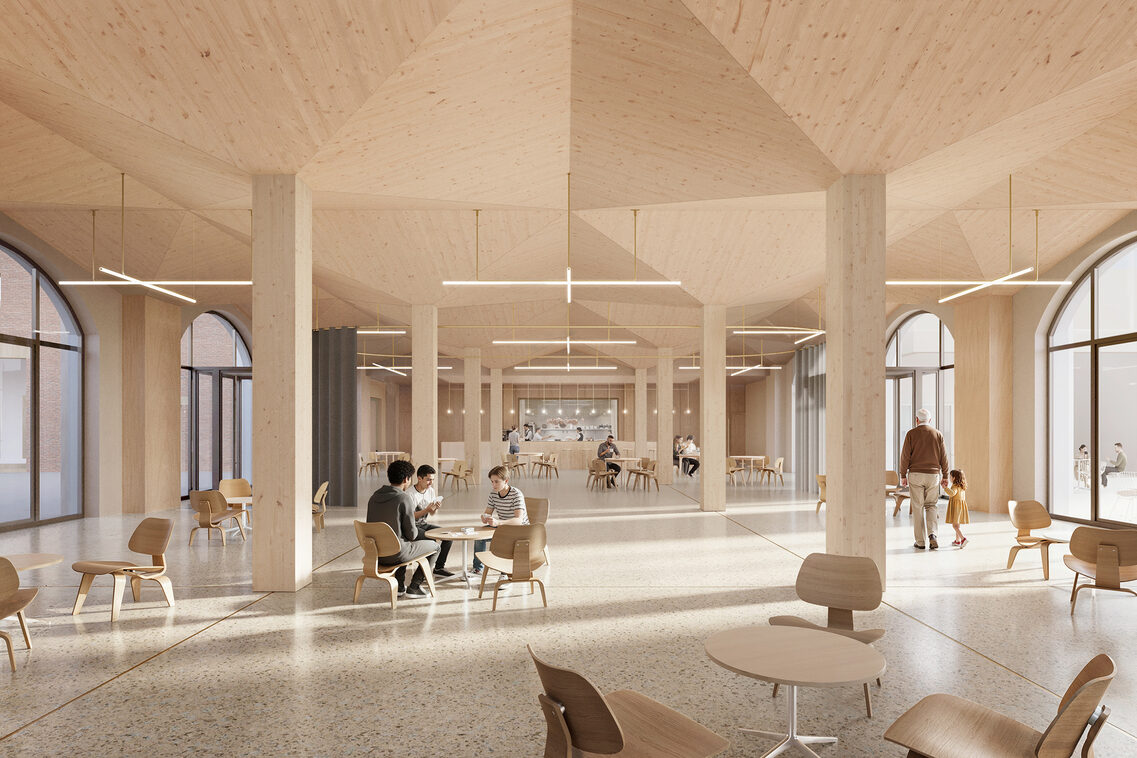
The Walhalla is envisioned as a place of collaboration. For example, the neighboring Mauritius Media Library will establish a “library of things” on the ground floor, where dining options and a “third place” are also planned. The term “third place” comes from sociology and, at its core, simply means that one is neither at home (first place), nor at work or school (second place), but rather in a third place—a neighborhood gathering spot, the living room of urban society. Here, people can work on their laptops, read, relax, and charge their cell phones without making purchases, or meet up with friends.
Another fundamental programmatic approach is that of education. Promoting education and offering children, teenagers, and emerging young artists a place to grow is another mission of the future cultural venue.
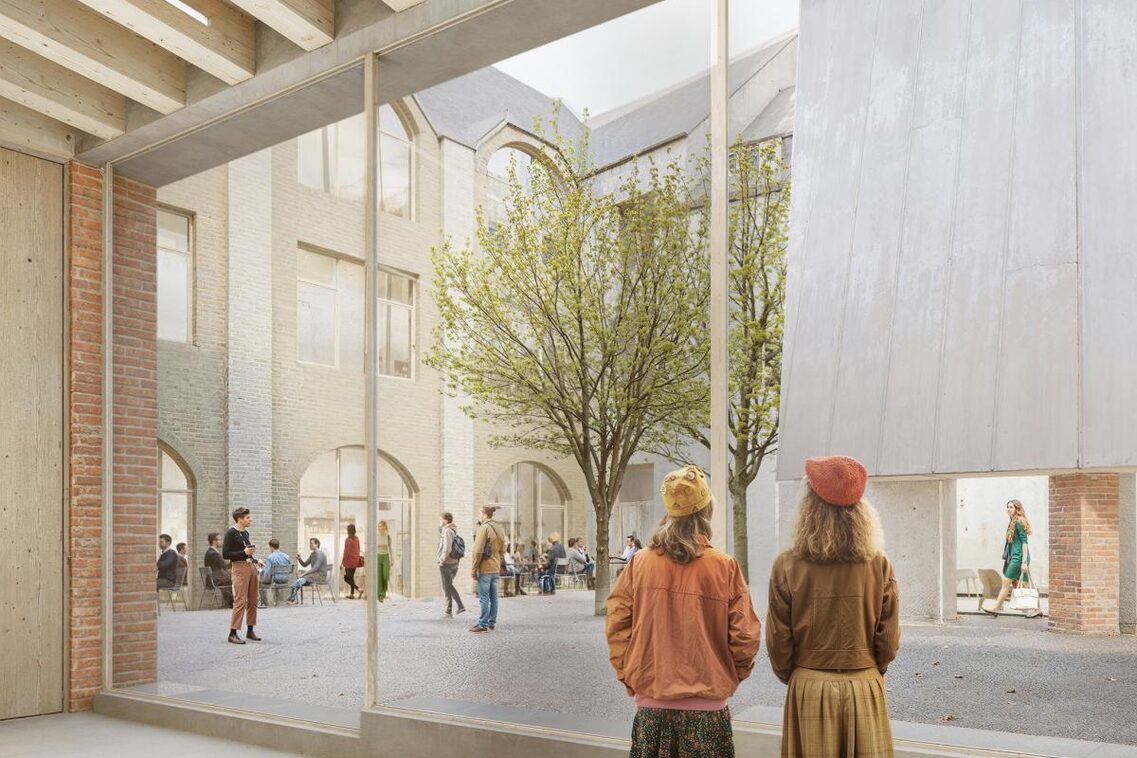
And citizens are invited to make use of it. For example, a dance and movement studio can be booked for yoga classes; in collaboration with local restaurants, dance tea parties or a Riesling wine tasting can be held. And the Walhalla will come right to your doorstep. The steering committee, chaired by the mayor, had once again emphasized this mission. This means an open-air movie theater or a summer concert could take place on Mauritiusplatz. With this diverse program, the Walhalla will provide the answer to the question: How can we achieve the necessary transformation and revitalization of our downtown?
The Walhalla immediately sets the imagination free, as an artist, as a cultural person, you immediately start developing ideas, designing, planning - it's almost a bit magical and simply enchanting.
What fascinates you personally about this place?
Vanessa: As soon as I step into the Walhalla and the ballroom surrounds me, I can picture in my mind’s eye how this cultural venue will come alive. The director’s console at the back of the audience area, the hall lights, a lively buzz of voices as people take their seats, the silence in the darkness before the curtain slides aside and reveals the stage, bathed in just the right light, the first notes, footsteps, words .... The Walhalla immediately sparks the imagination; as an artist and a person of culture, you’re instantly drawn into developing ideas, conceptualizing, and planning—it’s almost a bit magical and simply enchanting. The fact that, as a cultural manager for the state capital of Wiesbaden, I can redevelop a cultural venue is a truly wonderful task that fills me with joy and gratitude for the trust placed in me. And the overarching purpose—from strengthening democracy through culture, to opening a cultural venue to the entire city community, to kickstarting a transformation of the downtown area and thereby contributing to economic development—makes my role both responsible and fulfilling.
Good to know:
- Thanks to the “Verborgenes Wiesbaden” (opens in a new tab) digitization project by Martin Kraft and students in the Media Management program at RheinMain University of Applied Sciences in Wiesbaden, you can explore the Walhalla virtually.
- During the event day on September 15 (opens in a new tab), you’ll have the opportunity to learn more about this future cultural and event venue through a performance at Freudenberg Castle, informational sessions at the construction site, and an exhibition.
- Here (opens in a new tab) you’ll find all the latest information about the Walhalla!