Brood care - love without words
Until January 10, 2027, the special exhibition at the Museum Wiesbaden shows the spectrum of parental care - from egg laying to long-term care.
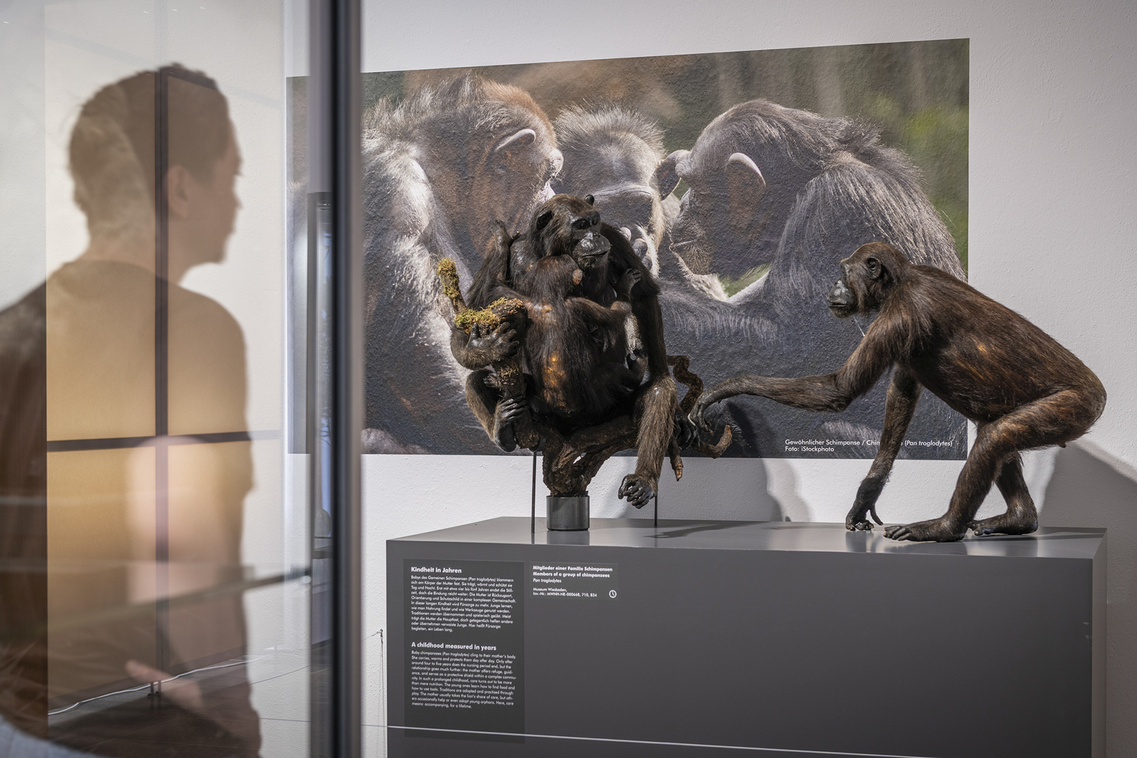
Every living creature begins its life vulnerable, and in the animal kingdom, the decision of how much time and energy to invest in the next generation is made anew time and again. The exhibition showcases species that leave their offspring to fend for themselves after laying eggs, as well as those that guard, carry, feed, defend, or stay with them for a long time to ensure a young one survives and thrives.
In the case of the maleo (Macrocephalon maleo), for example, care is literally in the right place: The adult birds bury their eggs in volcanic-heated sand or on sun-drenched beaches on the island of Sulawesi and leave the hatching to the environment. The chick fights its way to the surface alone and is on its own from the very first moment. Here, “brood care” lies in the location, the timing, and the construction work.
The two-spot tree frog (Ranitomeya imitator) operates quite differently. For this small poison dart frog from the Peruvian rainforest, parenthood becomes a cooperative effort. The male guards the eggs and keeps them moist. After hatching, it carries the tadpoles one by one to tiny pools of water in leaf axils or tree hollows. The female returns specifically to these nurseries to feed the offspring with unfertilized nutrient eggs. Over the course of weeks, this creates a distributed network of rearing sites—a picture of amphibian parenthood that turns conventional notions on their head.
Birds also challenge such notions. In the case of the rhea (Rhea americana), the male alone takes on the rearing. He builds the nest, incubates the eggs, and cares for the chicks for months. The young follow along early on, but the father keeps them together, warns them, leads them to cover, and places himself between danger and his offspring. The tasks seem familiar; it is only the division of roles that surprises.
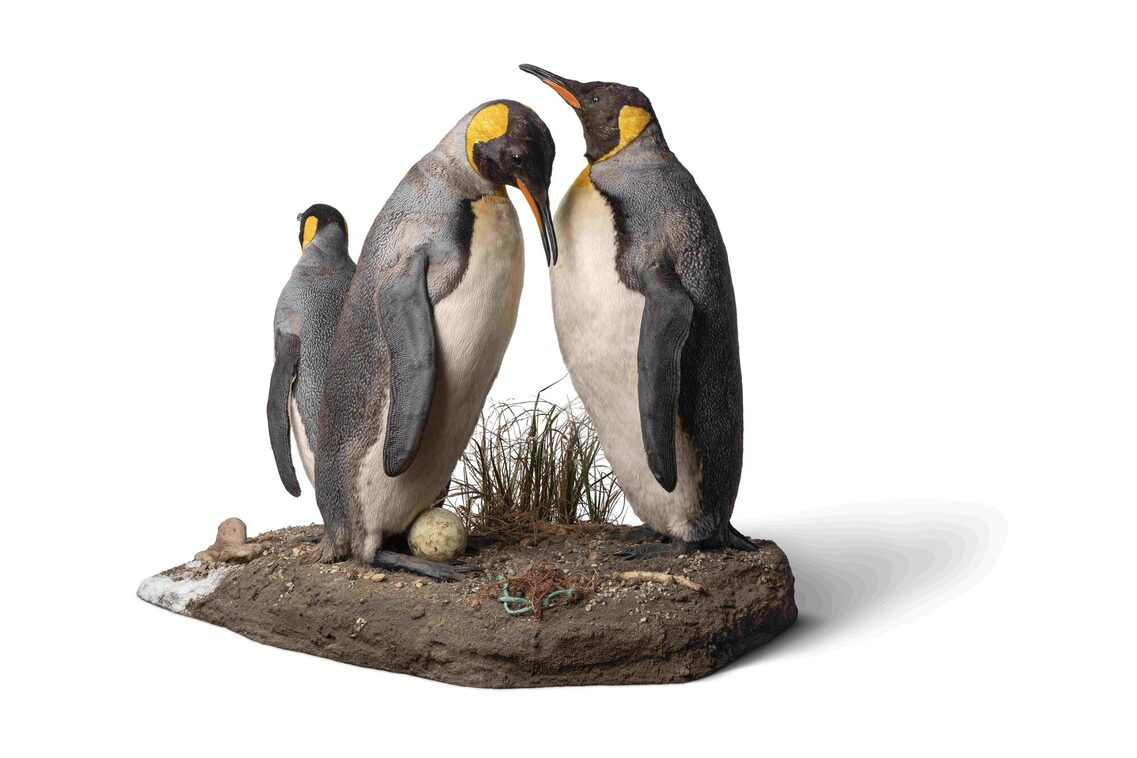
In some cases, care is measured primarily in terms of time. For the king penguin (Aptenodytes patagonicus), parenting is a marathon. The egg is not in the nest, but on the feet under a warm brood patch. The parents take turns. One warms and protects, while the other searches for food in the sea. Here, caregiving means waiting, enduring, and returning—sometimes for weeks without food.
For the white-throated sloth (Bradypus tridactylus), care means physical closeness. The young clings tightly and travels through the treetops on its mother’s back. Her body serves as a means of transport, camouflage, and a source of warmth all at once—a safe haven in a world that offers little chance for a quick escape. Only after six months does this close bond slowly begin to loosen.