The target group referred to below consists of refugees who have been registered in Wiesbaden since January 1, 2015, and who meet the legal requirements for residence as set forth in the Residence Act and the Asylum Act.
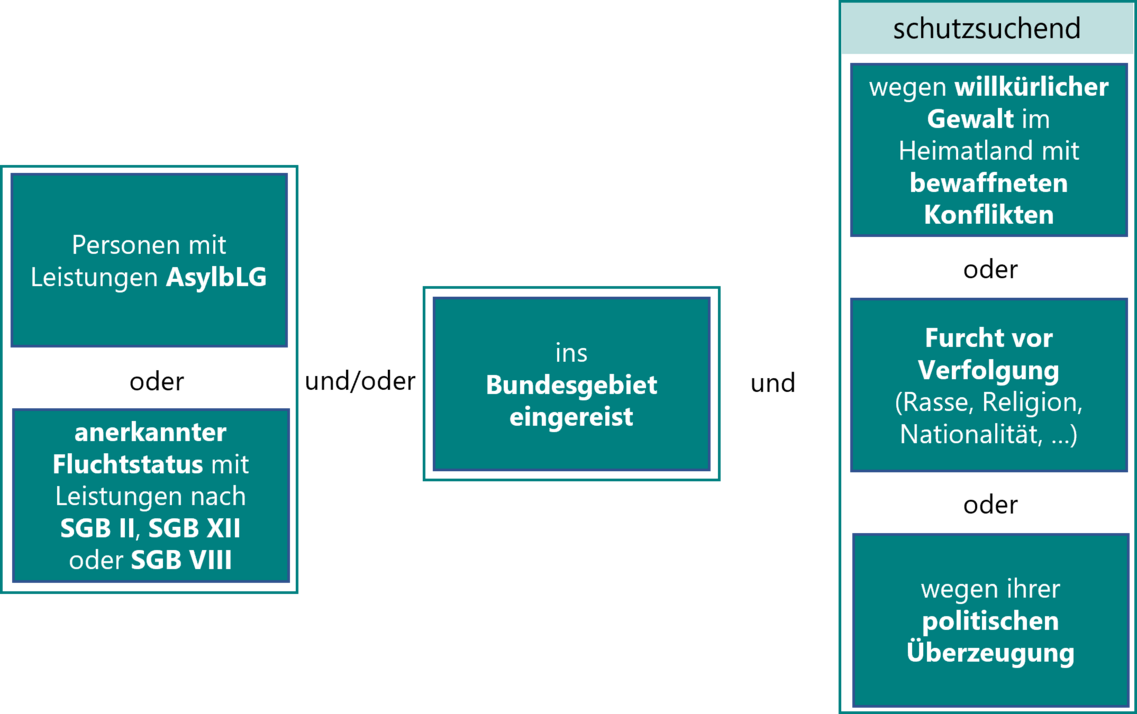
Based on the “Integration Concept for Refugees in Wiesbaden 2017–2020” issued by the Office for Integration and Immigration, the term “refugees” refers to all persons
who receive benefits under the Asylum Seekers Benefits Act
or, due to their recognized refugee status, receive benefits under SGB II, SGB XII, or SGB VIII
and/or have entered the federal territory
and, due to arbitrary violence in their home countries in the context of international or internal armed conflicts
or out of fear of persecution due to their race, religion, nationality, membership in a particular social group
or their political opinion” (page 5).
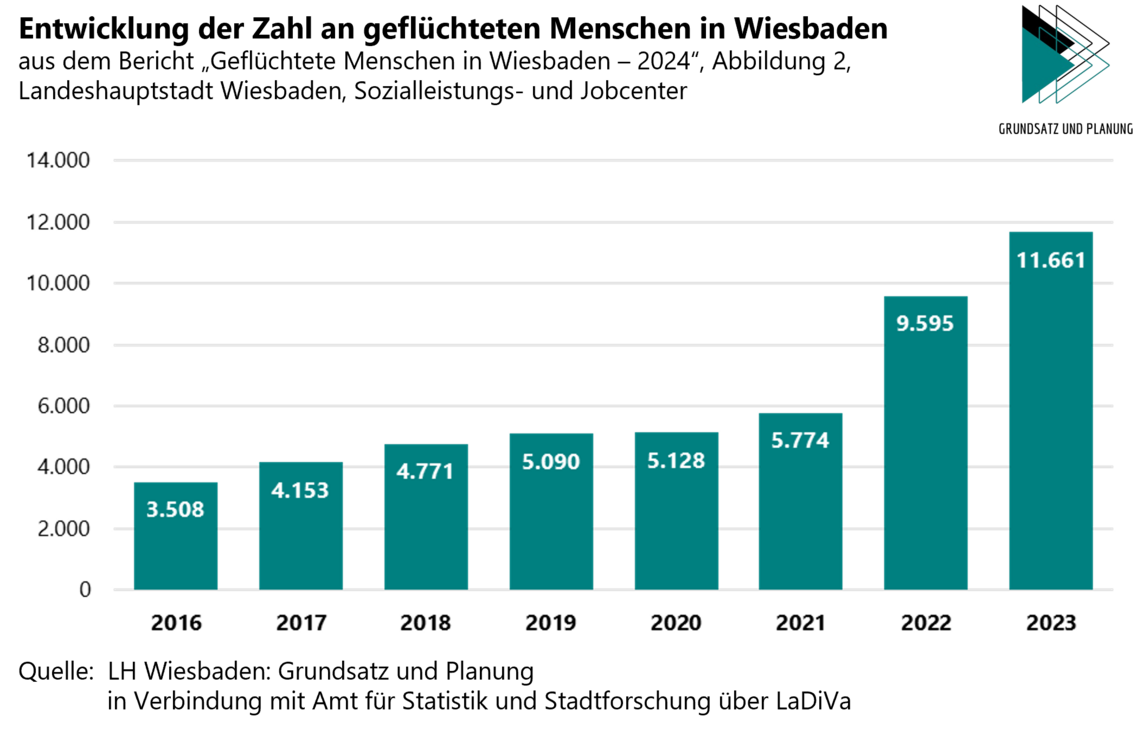
How many refugees live in Wiesbaden?
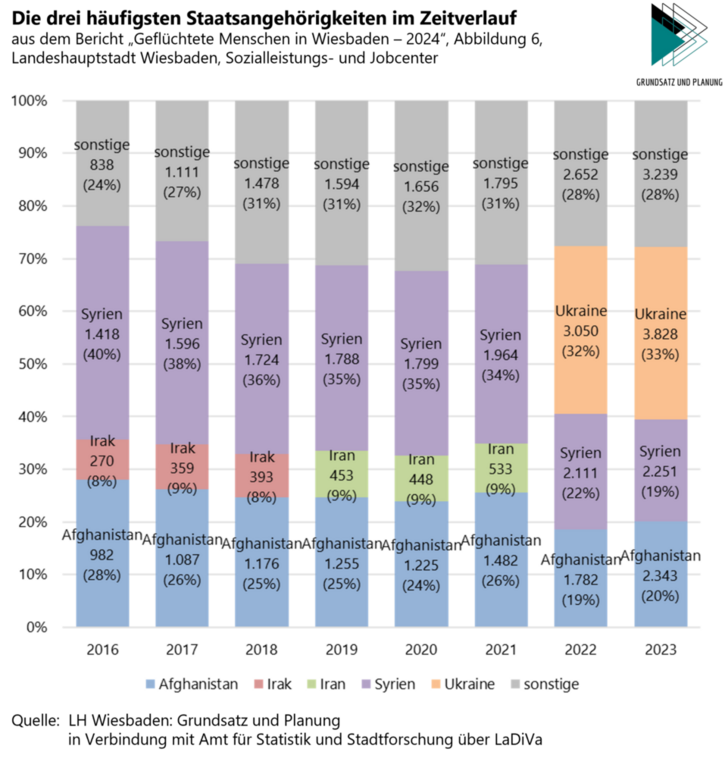
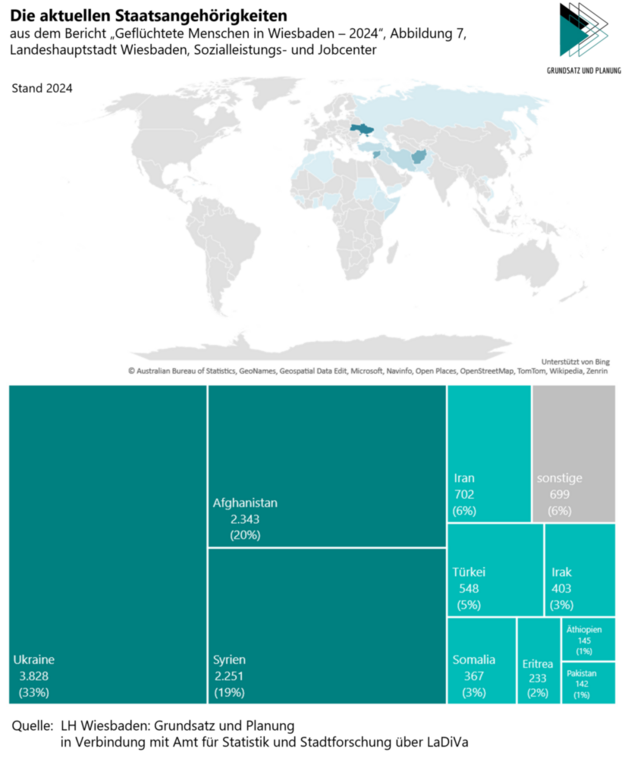
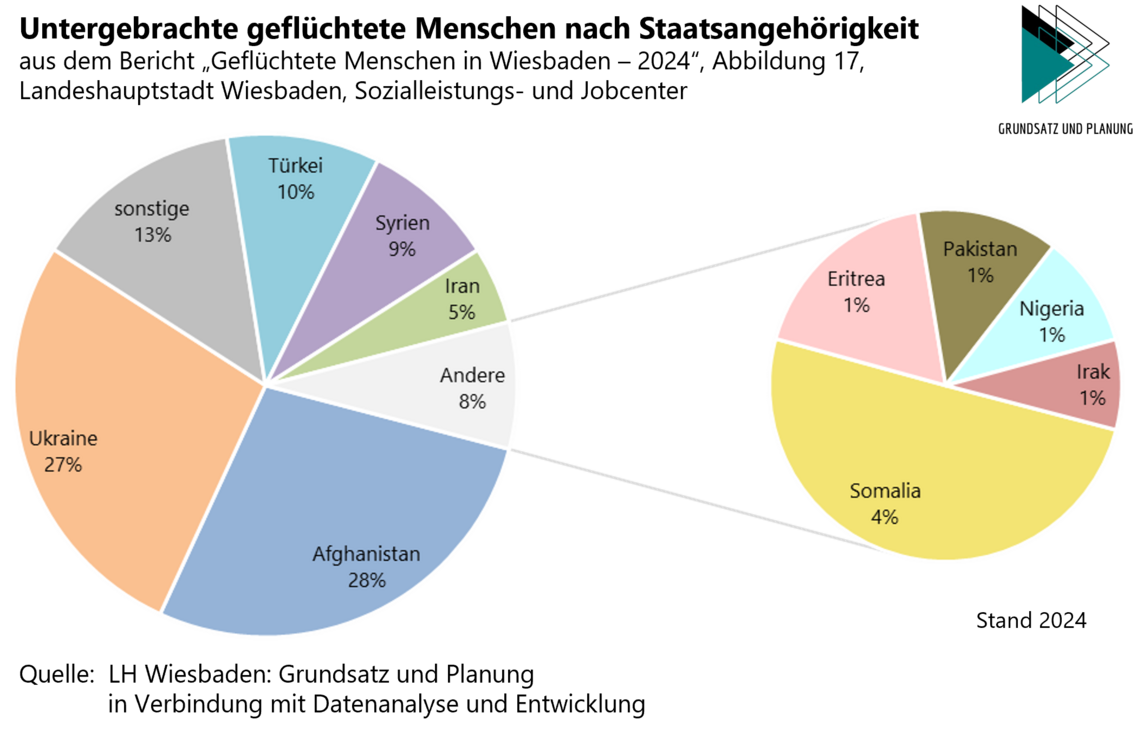
What are the main countries of origin of the refugees?
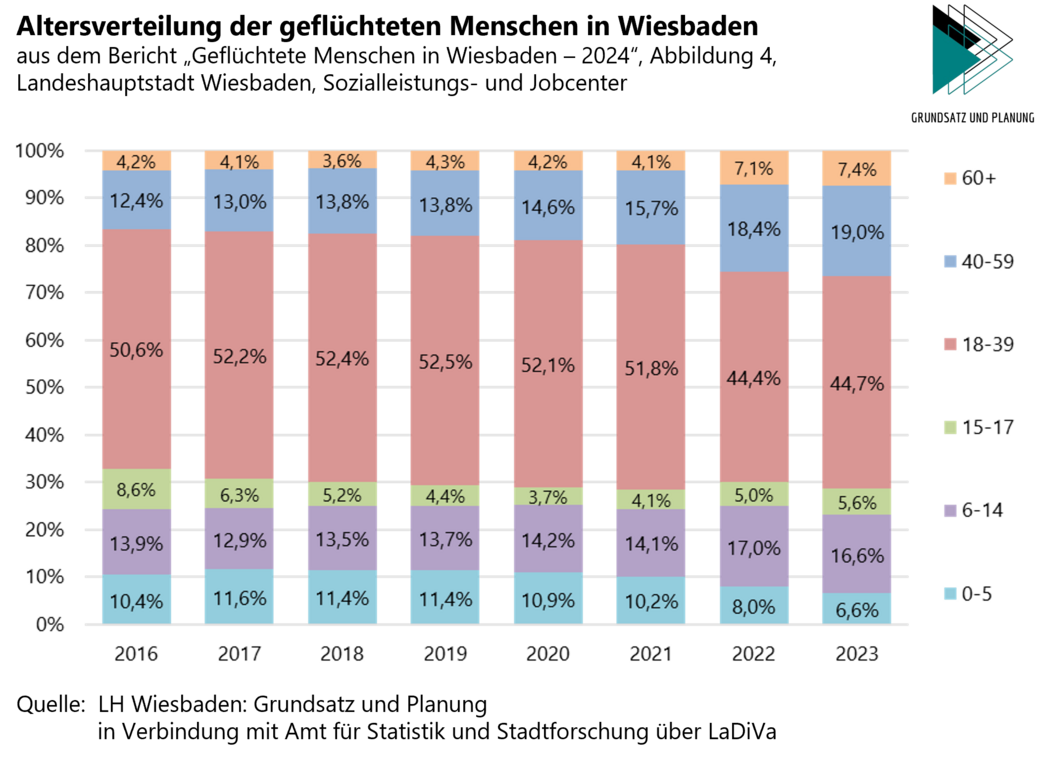
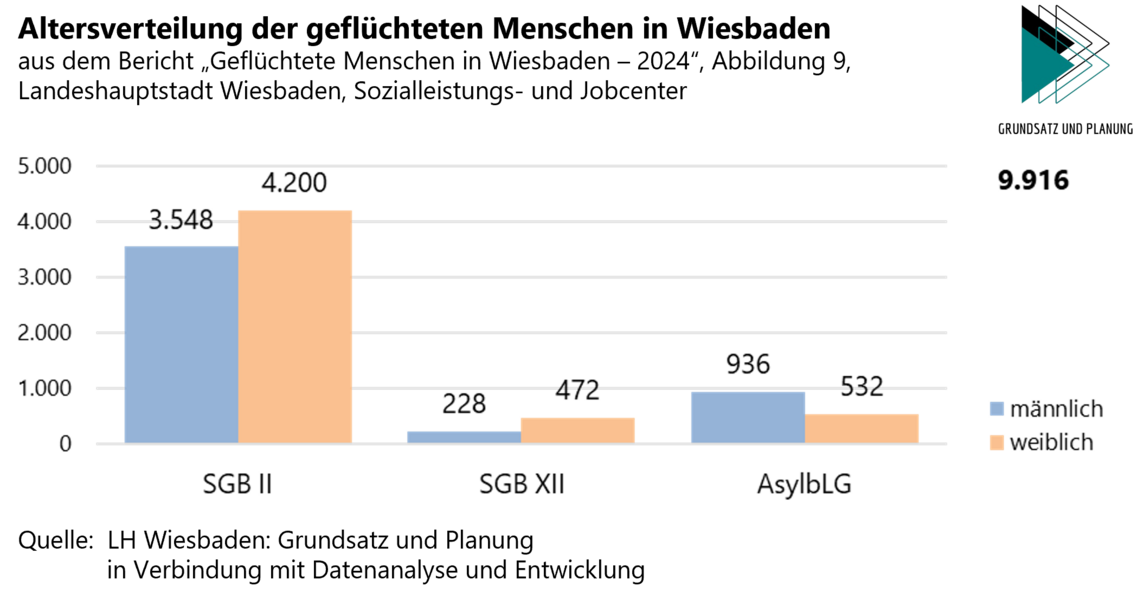
What is the age distribution of the refugees?
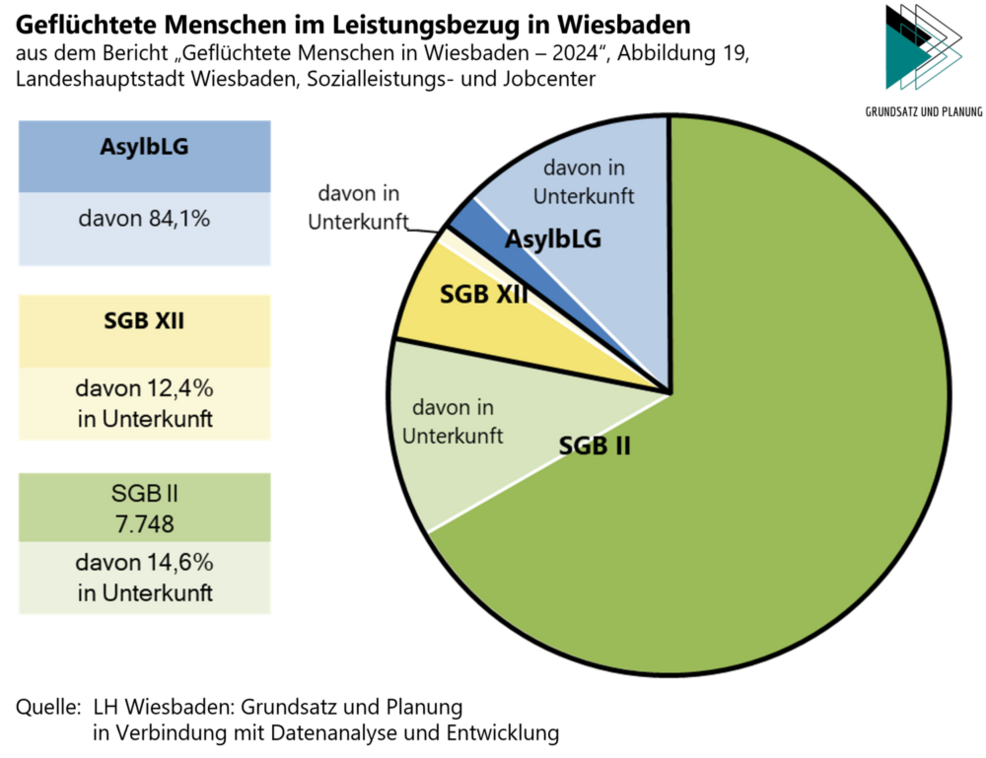
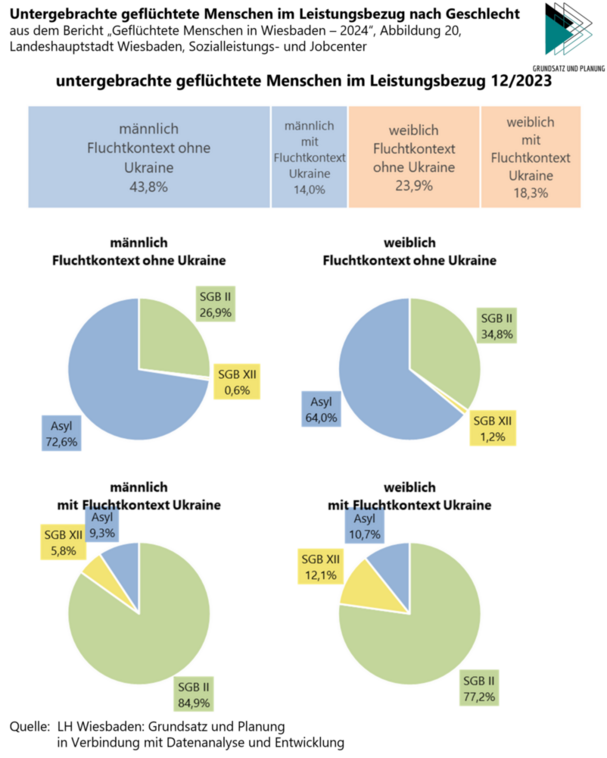
How many refugees are in receipt of benefits?
How many refugees are assigned per week?
Allocations by the State of Hesse, based on the Königstein formula, are made for the state capital of Wiesbaden every Wednesday. When considering monthly arrivals, however, departures (people leaving the accommodation due to relocation, deportation, or death) must also be taken into account. On a quarterly basis, the cities receive quota statements as well as a forecast of the number of people expected to be admitted in the coming quarter. For the fourth quarter of 2024, the Darmstadt Regional Council anticipates a weekly intake target of 30 people for the state capital, Wiesbaden. For the third quarter of 2024, a total intake target of 300 was projected; in reality, 264 people were admitted during this period.
Apart from those assigned by the State of Hesse and refugees from Ukraine, no other refugees have made their way to Wiesbaden and requested assistance with housing.
What are the guidelines of the state capital Wiesbaden regarding accommodation?
In the state capital, the housing of refugees is guided by the so-called Wiesbaden Policy. By political consensus, the focus is to be placed on primarily decentralized housing in predominantly smaller facilities. The addresses of these facilities are not made public. However, in addition to smaller facilities, larger ones must also be maintained in order to remain capable of responding to needs. Against the backdrop of the Wiesbaden Line, which remains in effect, issues such as costs, logistics, and staffing are becoming increasingly important.
There is a political commitment not to occupy sports halls or community centers. This is due, on the one hand, to the living conditions there for the people being housed, and on the other hand, to maintain social harmony and not to deprive the urban community itself of spaces.
What accommodation is available?
The Social Services and Job Center of the State Capital of Wiesbaden defines accommodation as a building or property in which individuals are housed by the responsible department. The costs for this are covered by the Social Services and Job Center. A shelter is counted as a single facility if it is a contiguous building complex. Based on this definition, a total of 103 shelters were available as of September 2024, including 81 houses/building complexes and 22 apartments. These are reserved for both refugees and (homeless) individuals who are housed in accordance with the Hessian Security and Public Order Act (HSOG). Of these, eight accommodations are classified as large-scale accommodations, each with space for more than 250 people.
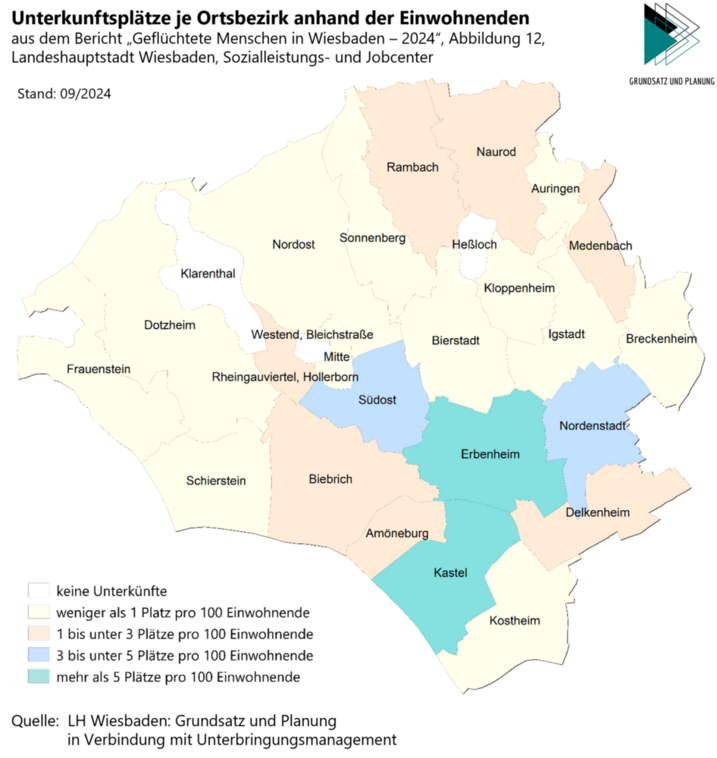
How are the accommodations distributed across the city?
What are the criteria for renting accommodation?
In 2022, a large number of shelters were leased, primarily as a result of the war in Ukraine and the large influx of refugees. With a total capacity of just under 1,200 beds, 23 shelters were leased, many of them with a lease term of (initially) five years. In the following two years, the number of leases declined significantly, and the additional capacity also decreased by more than half in 2023 to 546.
Based on experience, the leasing of new accommodations is communicated more transparently, and the respective local councils are more closely involved. In addition, local districts that already have a comparatively higher density of accommodations are given less consideration for new leases. This is done, however, with the understanding that suitable properties for housing cannot be found in all local districts to the same extent.
How is the accommodation allocated?
Accommodation is allocated on an individual basis and depends on the specific property. After careful consideration, certain accommodations may be reserved primarily for specific target groups, for example, if they are accessible to people with disabilities.
Capacity figures exist for each individual accommodation unit. Initially, the goal is always to achieve maximum occupancy. However, deviations from the defined capacity are unavoidable in practice due to various factors, and full occupancy is often hardly possible. The reasons for this are varied and can be explained, among other things, by short-term vacancies due to move-ins and move-outs as well as major renovations, the location of the accommodation, family accommodations (for example, a family of four is housed in a room that is technically designated for five people), single-person accommodations with a medical certificate due to health reasons or social incompatibility, as well as the gender and sexual identity of the individuals and many other aspects that must be taken into account. To improve planning, the discrepancy between actual occupancy and the actual capacity is factored in, and a realistic occupancy rate of 90% is assumed.
Maintaining a certain reserve is essential due to the dynamic situation and the desire to avoid occupancy in sports facilities and community centers. Certainty of action is required for reception management.
Space capacity is subject to significant fluctuations due to changing allocation figures as well as the termination and expiration of lease agreements, particularly for larger accommodations. For this reason, continuous monitoring and assessment of the current situation by the Social Affairs Department and the relevant agency, as well as potential adjustments, are indispensable.
How much does the accommodation cost?
Accommodation in municipal housing establishes a limited-term legal relationship under public law (Sections 3 and 4 of the State Reception Act). In Wiesbaden, a fee based on actual costs is charged in accordance with the Accommodation Fee Ordinance. A revision of the fee ordinance is currently pending and provides for an increase in the usage fee from €360 to €530 per bed. This fee is covered by the respective service provider if the individual does not have sufficient income to cover it.
In most cases, the number of beds is negotiated with the landlords of the accommodations, and rents are paid based on this. Currently, flat-rate fees of up to a maximum of €360 per bed are agreed upon, plus a maximum of €125 per bed for utilities, unless billed on a cost-plus basis. Since the accommodations have varying standards and amenities, the amount of the flat-rate fees also varies. These include initial and replacement furnishings (except in cases of vandalism), renovation costs, and the cost of providing an internet connection. Necessary renovation work to convert a building into housing is also financed by the landlord from the flat rate per space. This typically covers costs for additional toilets and showers. The utility fee includes, among other things, costs for insurance and janitorial services, as well as consumption costs for electricity, gas, and/or water.
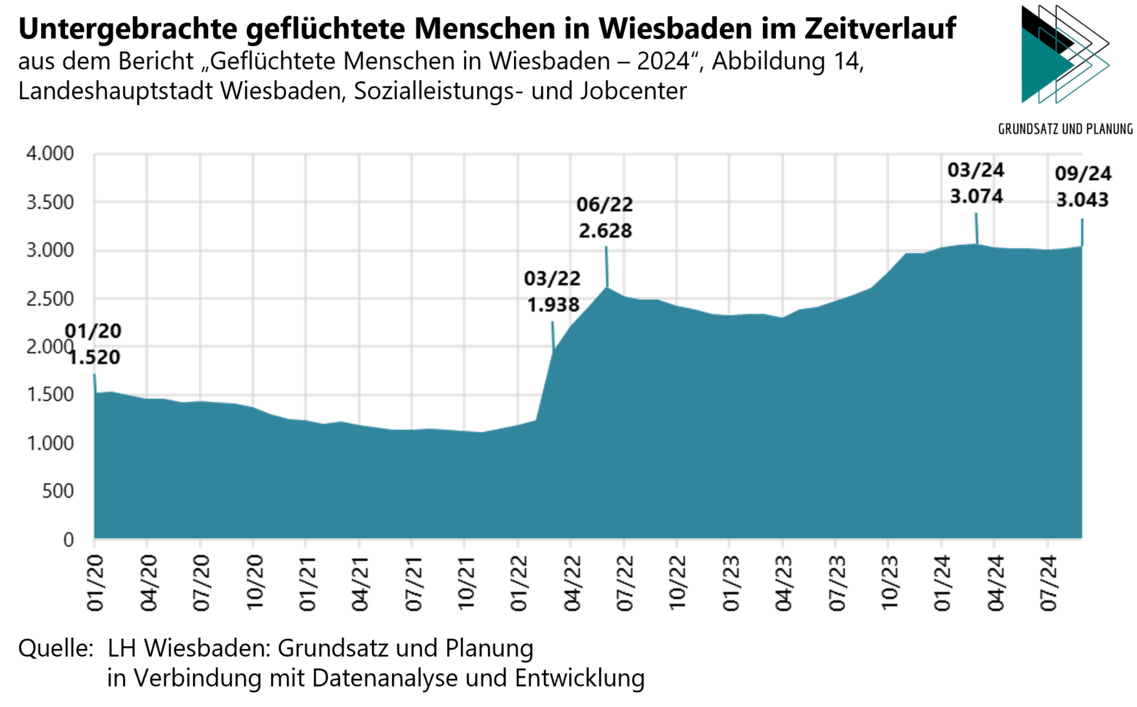
How have things developed in recent years?
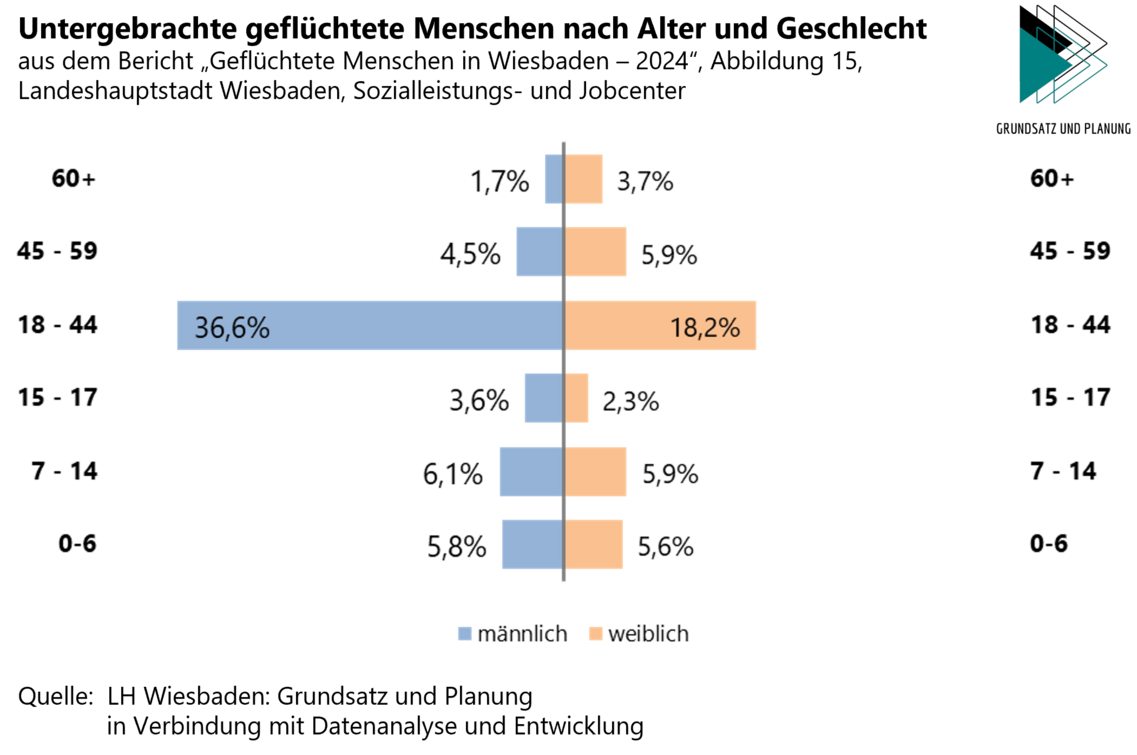
What is the social structure of the refugees accommodated?
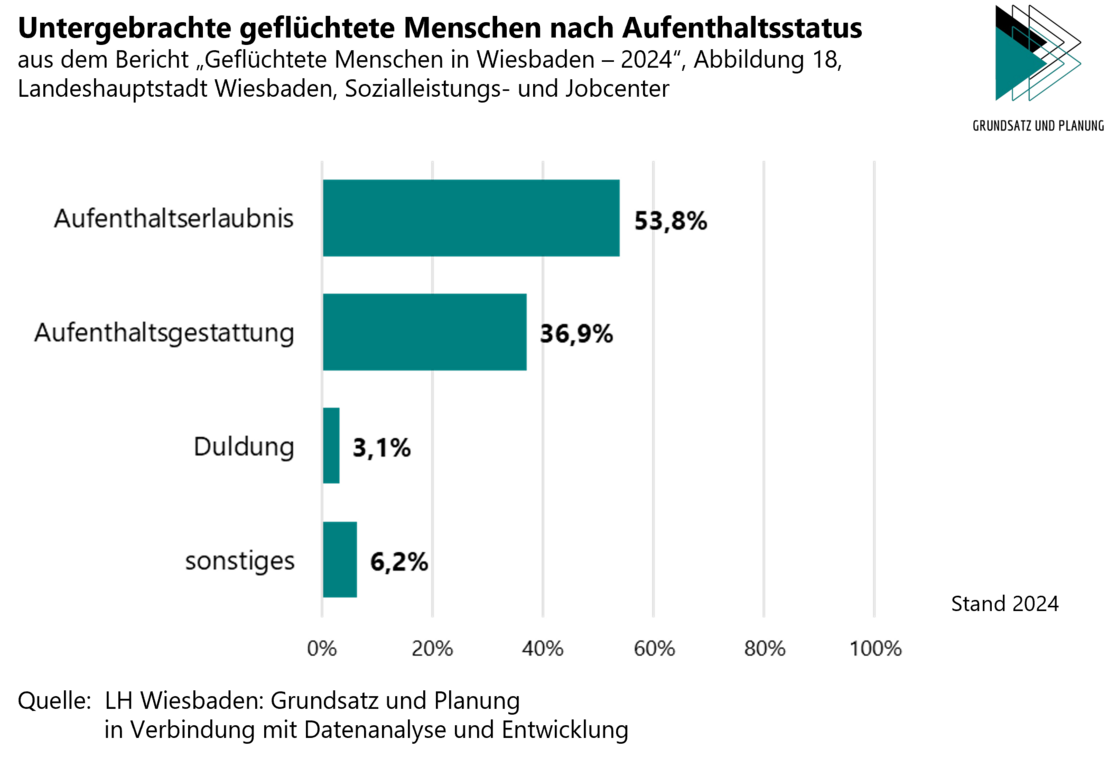
The following data on the social structure of the refugees in shelters is based on the specialized software used by the “Social Work in Shelters” department for data collection, as of September 30, 2024.
What is the latest information on the payment card?
You can find the latest information from the State of Hesse, which applies to all municipalities in Hesse, here: