
Don't think, look!
The paintings by Austrian painter Wolfgang Hollegha are huge, full of color and life and can be seen until October 25 in the exhibition "Don't think, look!" at the Museum Reinhard Ernst. A brilliant German premiere of one of Austria's most important international abstract painters after 1945!
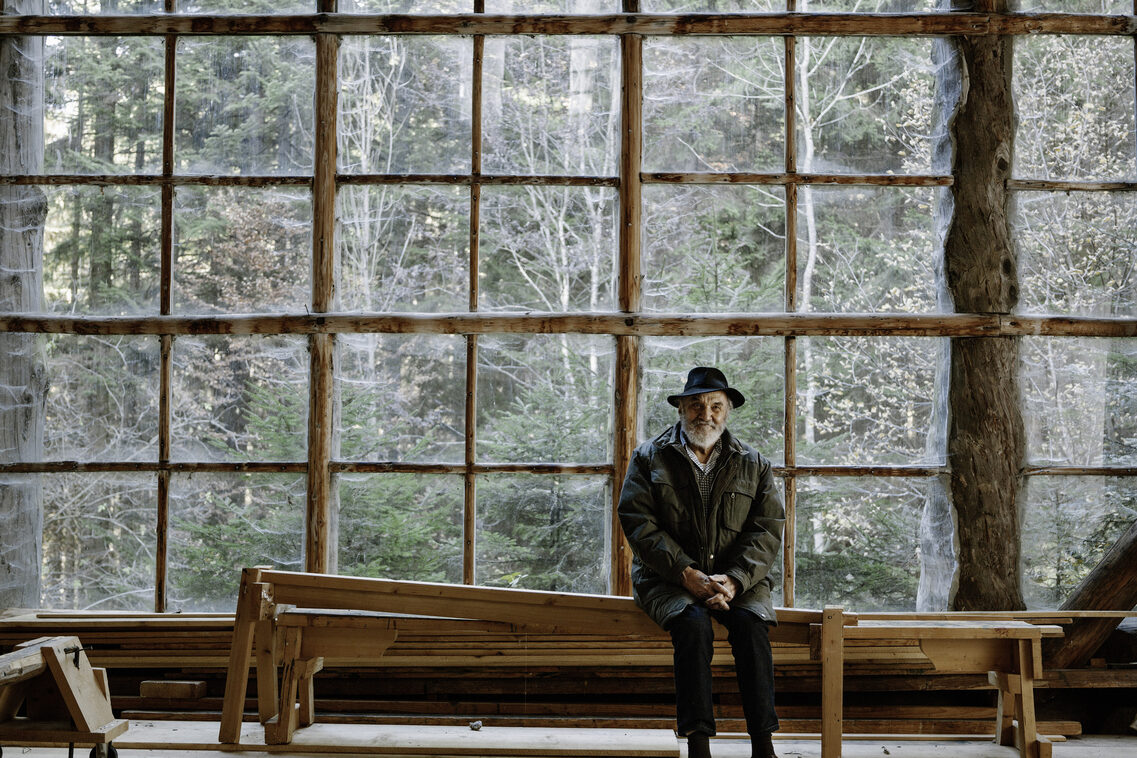
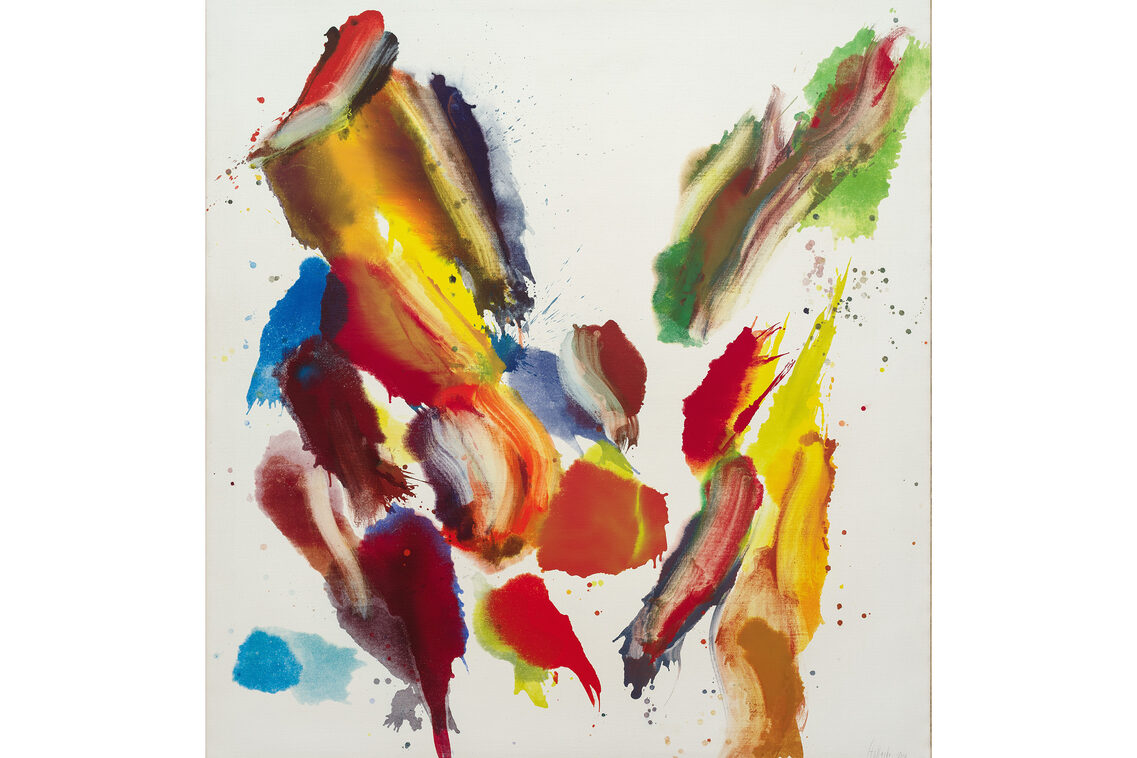
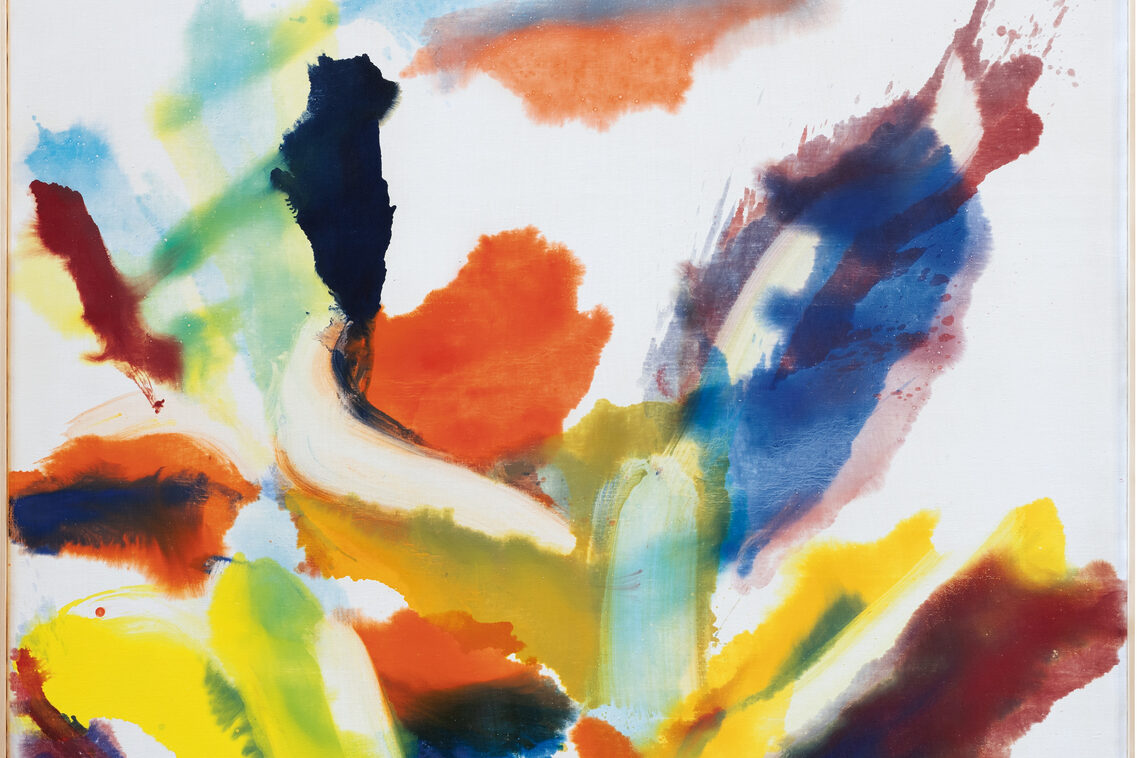
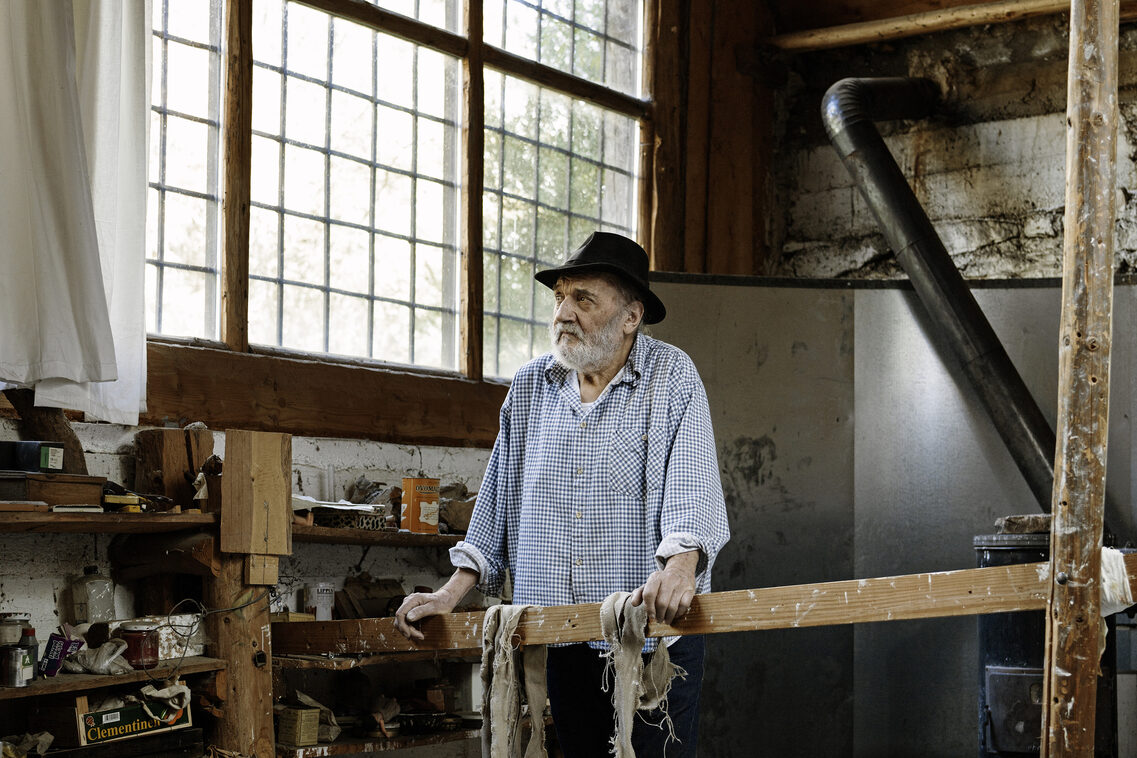
For the first time in Germany: Across a total of 660 square meters, the museum presents a retrospective of Wolfgang Hollegha’s (1929–2023) work spanning six decades, under the motto “Don’t think, look!”—a quote from the philosopher Ludwig Wittgenstein.
The exhibition, which includes 23 paintings on canvas and four works on paper, invites you to do just that: to switch off your mind and immerse yourself in the images. It’s not about explanations, theory, or analysis, says curator Lea Schäfer, but about seeing. That is precisely what makes the artist’s work so relevant today. What we can learn from him is to take our time, train our eyes, and trust our own abilities.
Early career in New York
Born on March 4, 1929, in Klagenfurt, Hollegha grew up in Styria. From 1947 to 1954, he studied at the Academy of Fine Arts in Vienna in Josef Dobrowsky’s master class. By the late 1950s, he had already gained significant recognition in New York—at the heart of the artistic avant-garde that would permanently transform painting. Supported by the influential American art critic Clement Greenberg, he exhibited alongside the leading figures of Abstract Expressionism, including Friedel Dzubas, Morris Louis, and Jules Olitski.
And he was not even 30 when he was awarded the Guggenheim Award for Austria in 1958—as the youngest recipient and alongside Alberto Giacometti, who received the prize for Switzerland, and Mark Rothko for the United States.
Self-chosen seclusion
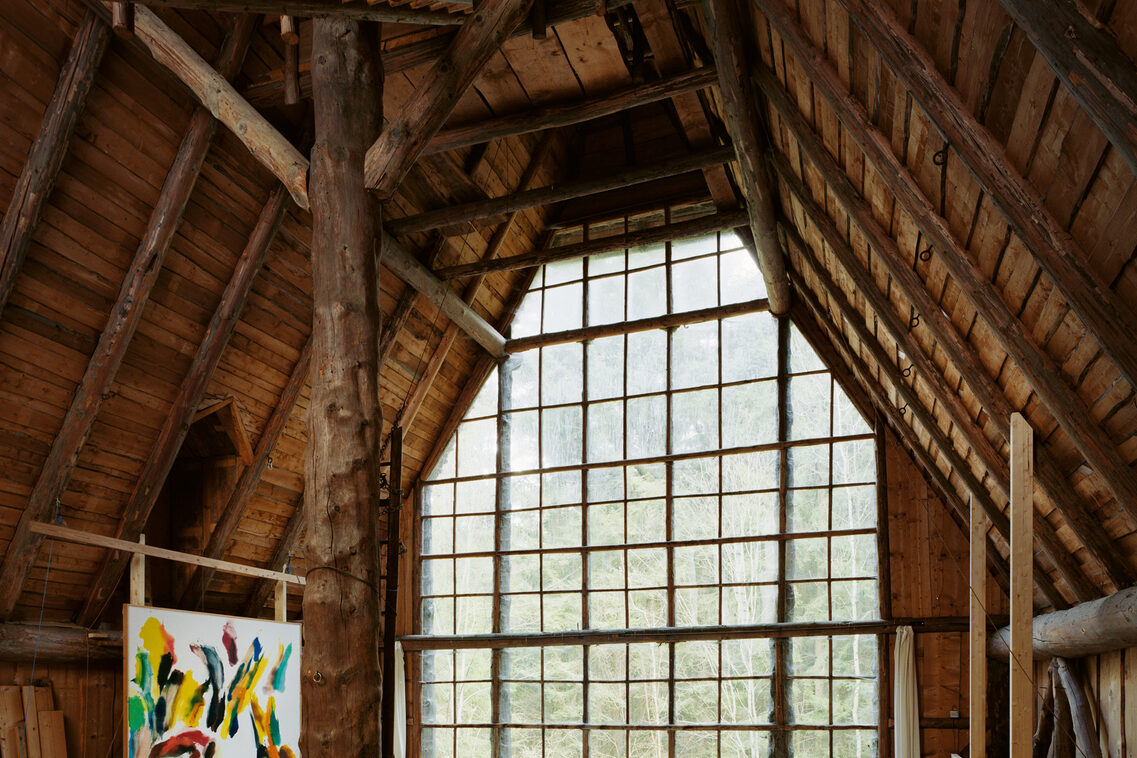
Despite his success in New York City, Hollegha chose a different path: in 1961, he purchased a 17th-century farmhouse on the Rechberg north of Graz, which he renovated according to his own plans. The summer studio, in particular, is remarkable for its height alone, which is approximately 15 meters. Here—surrounded by nature and in self-imposed seclusion—he developed a radically independent, often monumental body of work over more than six decades—focused, uncompromising, and of extraordinary painterly intensity through its reduction and condensation.
💡 How did Wolfgang Hollegha get his large-format paintings out of his studio? He created a wide, narrow opening through which the huge canvases could be moved directly out of the studio without having to fold or roll them first.
Master of reduction and precise condensation
When comparing his drawings—which he regarded as raw material and usually discarded—it becomes clear how he worked: his motifs included children’s toys, a basket, logs, or his cap. Through a series of steps, he abstracted these to such an extent that he created a visual experience entirely of his own.
He worked with a craftsman’s touch: always just an arm’s length away from his work, he poured paint onto the canvas using bowls, applied it directly with his hand, or smudged it with a rag. The music of Johann Sebastian Bach was a faithful companion to the artist in this process. To assess the impact of his works, he would repeatedly climb up to an eleven-meter-high gallery, which is similar in height to the “Cathedral”—the light-filled space in the Reinhard Ernst Museum.
Dr. Oliver Kornhoff, Director mreIn Wolfgang Hollegha, we experience a painter who transforms our often inconspicuous (motif) world into wonderfully captivating color events. In the spacious, bright rooms of the Reinhard Ernst Museum, his paintings begin to breathe and unfold their full radiance and color intensity.
Juxtaposition with contemporary artists
A particular highlight of the exhibition is the juxtaposition of Hollegha’s work with that of his American contemporaries, such as Jackson Pollock, Helen Frankenthaler, Friedel Dzubas, Morris Louis, Jules Olitski, and Larry Poons.
On display for the first time is Jackson Pollock’s unusual work “Eye-Scape” (1952), in which he employs the “soak-and-stain technique” that Helen Frankenthaler perfected. With an approach that appears calligraphic, Pollock lets the thinned paint drip onto the untreated canvas. Marks, stains, and gradients evoke totem animals—symbols from the folklore and legends of indigenous peoples—which had fascinated Jackson Pollock since his early childhood.