WerkRaum Wiesbaden in August
As part of World Design Capital Frankfurt RheinMain 2026, the WerkRaum will serve as an open forum for WDC projects, dialogue events, and other activities from May 2 through October 31, 2026. The sam – Stadtmuseum am Markt will also participate with individual events and the "Transparent Museum."
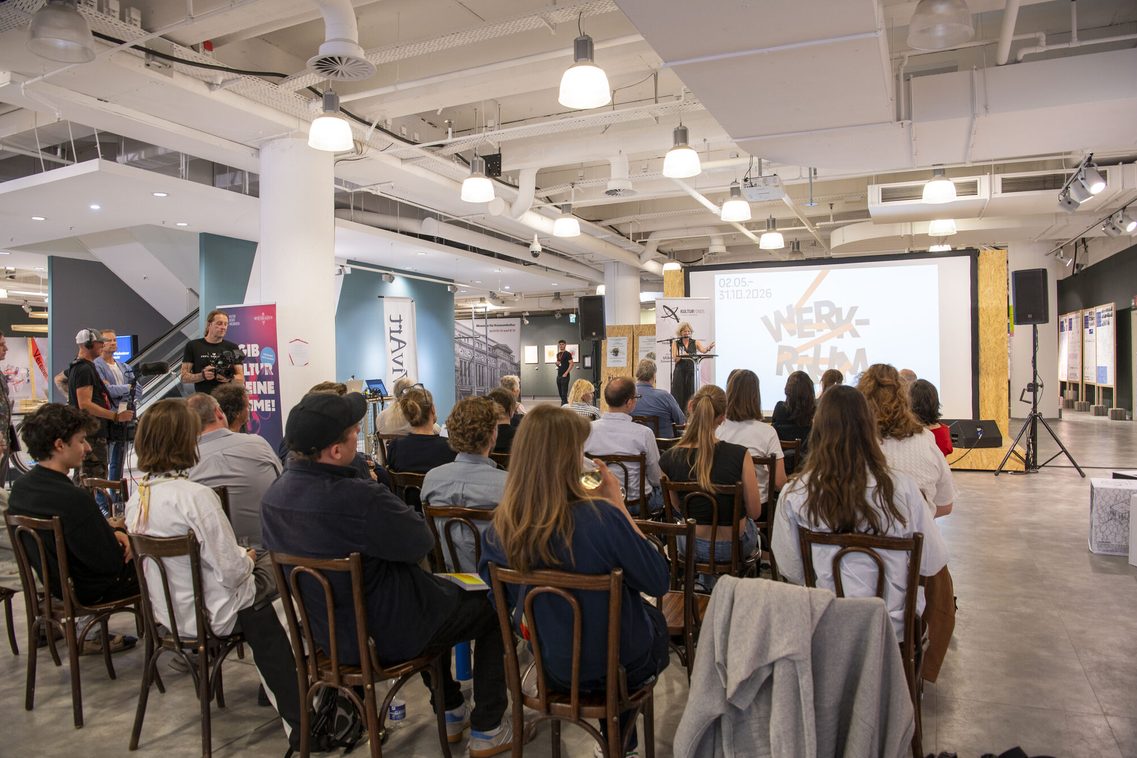
The Past as a Compass: Urban Stories at WerkRaum Wiesbaden
Looking back opens up new perspectives for the future. In August, WerkRaum will focus on the history of Wiesbaden—its defining moments, turning points, and achievements. This isn’t about nostalgia, but about finding direction: What experiences strengthen us today? What can we learn from past developments? And what values should guide our city in the future? Historical insights meet current debates. Together, we’ll discuss our hopes, concerns, and visions—and develop ideas for the city of tomorrow.
The sam—Stadtmuseum am Markt—will also be part of WerkRaum again in August. As a “transparent museum,” the sam offers insights into museum work, city history, and collection management. Visitors can engage in conversation with the museum team, discover objects, and learn how history is preserved, researched, and retold. The program is complemented by exhibitions and projects centered on design, democracy, urban space, and the future.
Thus, in August, the WerkRaum will once again become an open space for encounters, exchange, and new perspectives—right in the heart of downtown Wiesbaden.
August Schedule
Exhibitions
"SpotHot" Exhibition
August 9 through September 3 SpotHot
Wiesbaden has more and hotter thermal springs than any other UNESCO World Heritage city in Europe recognized for this feature. For around 25,000 years, they were the city’s source of energy and its elixir of life. Eighty years ago, most of these “hot spots” were sealed off—causing the 2 million liters of thermal water produced daily to virtually disappear from the city’s collective memory.
SPOT HOT is an invitation to rediscover the hot springs—the very DNA of Wiesbaden—on an inspiring walk. Initially, 9 “hot.spots” in Wiesbaden’s Historic Pentagon—as a growing gallery of the elemental, gradually bringing Wiesbaden’s hidden treasure from a depth of 2,000 meters back to the surface and transforming it into hybrid water experiences.
Goals: To make Wiesbaden’s DNA visible again, create democratic, low-threshold, accessible entry points, bring people in the city to new places, promote knowledge, social interaction, and networking, and learn how water can once again be utilized as a (geothermal) resource, a healing elixir of life, and a source of sustainability
Venue: WerkRaum Wiesbaden, as well as a city tour with stops in the Historic Pentagonal Quarter / Current context in the cityscape on the topic of “Hot Springs”: Storefront display on the topic of thermal springs at Schwalbacher Str. 25/27
"Bike-to-Work Challenge" Installation
August 10 through October 31: “Bike-to-Work Challenge”
Cycling boosts energy, reduces stress, and is good for the environment. The “Brückenschlag Mainz-Wiesbaden” project aims to ensure that, by the summer of 2026, significantly more people commute to work by bike instead of by car.
Over the course of one month, cyclists are encouraged to cross the three main bridges as often as possible. Counts will be tracked via an app and permanently installed devices. Companies will compete against each other in teams. The collected data will be used to plan a permanent high-speed bike route. A permanent bike express route would primarily serve as a flagship project for the entire region, making the connection between the two state capitals more sustainable and faster.
Location: Mainz and Wiesbaden: Public bike paths and streets; MAK Frankfurt: Drawing machine with a virtual representation of the routes traveled.
The creative agency for digital brand management serves clients ranging from international brands to small NGOs. With over 650 awards to its credit, the agency regularly receives national and international recognition. In addition to creating campaigns for clients, it also implements its own projects with a sociopolitical focus. In line with the agency’s own sustainability strategy, “Shared Value,” it develops products such as a CO2 app that encourages users to reduce their daily CO2 emissions.
Exhibition "KONSUM and ICH"
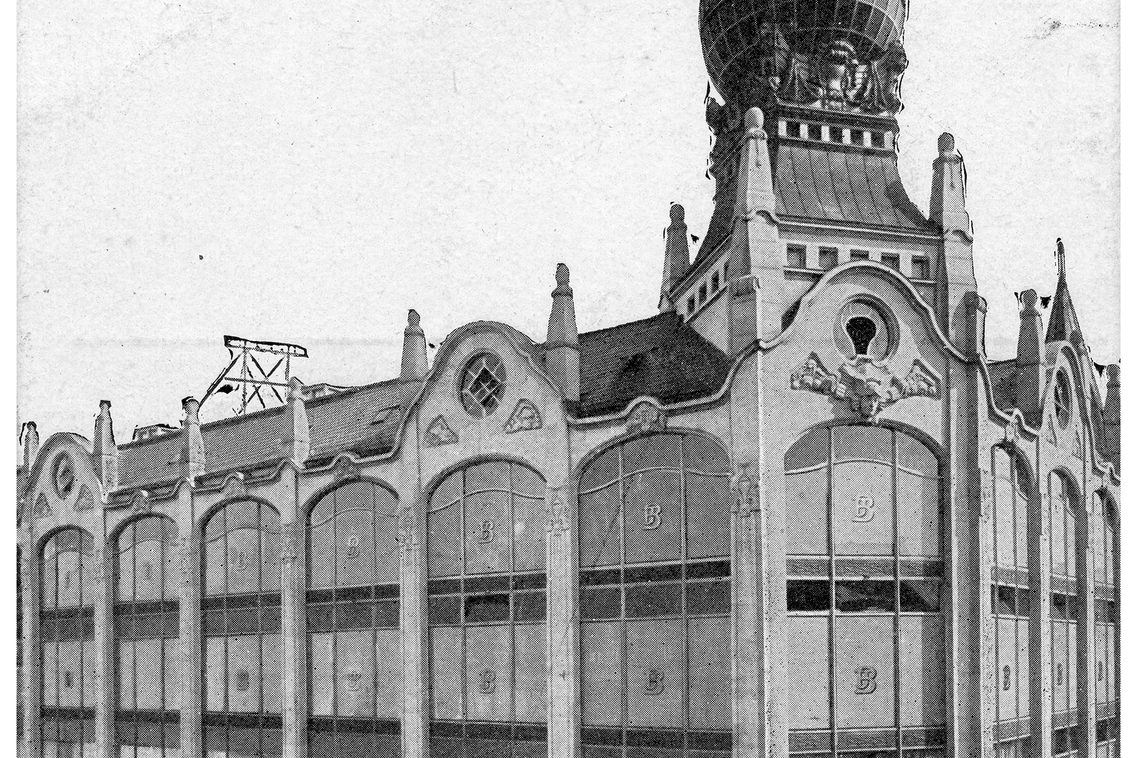
until October 31
The pop-up exhibition "CONSUMPTION and ME – From Department Stores to Shopping Apps" explores the relationship between consumption and us—and our democracy—from the early days of department stores to current issues surrounding online shopping, sustainability, and social participation.
It is both a history museum and a future lab: thus, it not only looks back but also invites visitors to participate and reflect. Together, visions for the future of consumption are to be developed and discussed.
Project partner: Janine Seitz, futurist.
10 Years of sam at the Marktkeller – The Glass Museum at WerkRaum

For the past ten years, sam—Stadtmuseum am Markt has been telling the story of Wiesbaden in the Marktkeller. In this anniversary year, the museum itself becomes the subject of an exhibition: highlights from past exhibitions, posters, photographs, and films look back on ten years of sam. Lectures, open studios, and behind-the-scenes glimpses invite visitors to rediscover the museum and its collections.
Through October 31 at WerkRaum
Hot! Springs! – A Participatory Photo Exhibition (September 25, 2024, through March 2, 2025)
The sam – Stadtmuseum am Markt is presenting a selection from the exhibition *Heiße! Quellen!*—a participatory photo exhibition organized in 2024 in collaboration with the HSRM and Wiesbaden residents. “Hot! Springs!” is to be understood in a figurative sense: Armed with cameras, the participants roamed the streets in search of places that symbolically radiate special energies. The resulting photo series, supplemented by personal comments, offer unique insights into Wiesbaden from individual perspectives.
The J.J. Höppli Collection in Wiesbaden | September 11 through October 9, 2022 | Crypt of the Marktkirche, Wiesbaden
We honor the man whose terracotta ornaments and architectural sculptures in the Historicist style shaped the appearance of numerous buildings in Wiesbaden beginning in the mid-19th century. At the Gläsernes Museum, we are showcasing excerpts from the exhibition *The Estate of J.J. Höppli in Wiesbaden*, which was on view in 2022 in the crypt of the Marktkirche. On August 28 and October 2, the sam’s conservator will demonstrate how J.J. Höppli’s architectural ornaments are prepared for exhibitions.
Favorite Pieces
Every month, visitors to the sam select a favorite object from the museum’s collection, which is then displayed in the permanent exhibition. In the Glass Museum, we display a selection of these as object tiles. Every object has a story behind it—what’s your connection to it? We’re collecting your memories, associations, and stories on colorful postcards.
Events at the Glass Museum
10 Years of sam - City Museum on the Market Square

Wednesday, August 19, 6–8 p.m.: “10 Years of sam” | Lecture by Sabine Philipp
The tenth anniversary of sam at the Marktkeller is an opportunity to reflect on the history of the city museum and its significance for Wiesbaden. Sabine Philipp takes the audience on a journey through the past and present of the sam, offers a behind-the-scenes look at the museum’s operations, and sparks curiosity about all that the sam still has to offer. She opens our eyes to exciting options for the museum’s future development in a new building at a new location outside the historic Marktkeller.

Friday, August 21, 1:00–4:00 p.m.: Open Studio at the Glass Museum
Botany Printing with Lina Becker
Wiesbaden’s history is closely linked to medicinal plants, mineral springs, and scientific research. In the Open Studio, local plants themselves become “printing blocks,” bringing together nature, the city’s history, and creativity.
We’ll capture Wiesbaden’s biotopes on paper using various printing techniques, creating an image together with the plants.
It’s about the process, not the result. We want to observe closely, combine different shapes, colors, and textures, and have fun together.
Come by and join us!

Sunday, August 22, 1:00–4:00 p.m.: Open Studio at the Gläsernes Museum
Write Like the Romans?
When the Roman legions withdrew from Wiesbaden about 1,400 years ago, they left behind not only thermal baths and forts, but also their writing system and the alphabet we use today.
In the writing workshop hosted by sam—Stadtmuseum am Markt at the Gläsernes Museum in WerkRaum—we’ll use a calamus, ink, and papyrus to experience what it was like to work in a Roman writing room. How were papyrus, parchment, and wax tablets used? What were pumice and quills used for? What did Roman script look like, and how did the Latin alphabet differ from ours?
Join us at the Roman writing desk and try your hand at writing with ink, reed, quill, and rush. During the workshop, we’ll create our own papyrus bookmark to take home.
Free admission—Suitable for children ages 6 and up—no registration required
Led by Noah Reichert, Museum Education, sam – Stadtmuseum am Markt

Tuesday, August 25, 2:00–4:00 p.m. What is Joana actually doing… at the museum?
Joana Brauhardt, research project assistant for the Dell exhibition, will set the stage for Dr. Frank Werner’s subsequent lecture with insights into the (State) Bauhaus in Weimar and the Frankfurt Art School. An open discussion.
Accompanying Program for the Special Exhibition "Christian Dell – From the Silver Jug to Goldgasse"

Tuesday, August 25, 6:00 p.m. Lecture: "Christian Dell: A Teacher in the Context of Weimar Modernism" | Lecture by Dr. Frank Werner
The Weimar Republic was a period of profound social and artistic upheaval. New concepts of functionality and industrial design fundamentally challenged traditional notions of arts and crafts. At the Bauhaus in Weimar and later in Frankfurt, Christian Dell taught at two centers of this creative renaissance. At the same time, he himself emerged as a defining designer of Weimar Modernism.
Thursday, August 27, 11 a.m. to 6 p.m. Workshop & Talk – dell(at)zeichenakademie
Christian Dell completed key parts of his training at the Hanau Academy of Fine Arts. Even today, silversmiths and metal artists are trained there. At WerkRaum Wiesbaden, the trainees offer insights into their exciting field of work.
“What Do Silversmiths Actually Do?
Deepening – Stretching – Flattening” Trainees from the silversmithing class at the State Academy of Fine Arts in Hanau demonstrate basic metal-forming techniques used in the creation of vessels. Come watch, ask questions—and try it out for yourself!
No registration required | Drop in anytime
Further information
Friday, August 28, and Friday, October 2, 2:00–4:00 p.m.: What exactly does… a conservator do?
A century leaves its mark on objects. Stefan Prießnitz, a conservator at the sam, demonstrates how architectural ornaments by J.J. Höppli are being prepared for an exhibition.
Upcoming Events at WerkRaum Wiesbaden | August

Thursday, August 20, 6:00 p.m.: Information session on the Wiesbaden heating transition
The heating transition is one of the major challenges facing our city in the future. Currently, about 70 percent of Wiesbaden’s heating needs are still met by natural gas—yet the goal is for the supply to be climate-neutral by 2045. This can only be achieved through district heating, electricity, and climate-neutral gases.
This public information event will provide residents with an overview of the various options available for their own properties. Learn more about the results of the municipal heating plan, the expansion of district heating, connection options, solutions for decentralized heat supply, and relevant funding opportunities.
History isn’t just about the past—it’s also shaped by the decisions we make today. The heating transition will bring lasting change to Wiesbaden and its neighborhoods, making it part of the city’s history of tomorrow. As part of WerkRaum’s monthly theme “City History(ies),” the event focuses on the future development of our city.

Monday, August 24, 11 a.m. to 7 p.m. WItopia Action Day: WandelWerkstattWelt
WItopia: An evolving exhibition conceived and curated by WandelWerkstattWelt
We create, invent, and dream up the world, just the way we like it.
Images, stories, and ideas for the future conceived, drawn, painted, dreamed up, observed, and documented by children in Wiesbaden as part of the School Year of Sustainability. The children explored the question: If you could decide for yourselves, what would your little corner of Wiesbaden look like in the future?
Program
The results from last year are on display and being presented. But it doesn’t stop there! Visitors—young and old—will be stimulated, inspired, motivated, and encouraged through questions, interactive exhibits, discussions, hands-on activities, and games to put their own stories, visions of the future, and ideas for the future down on paper and help the exhibition grow.
Dates:
| Friday, August 24 | 11 a.m. to 7 p.m. |
| Monday, October 19 | 5:30 p.m. to 7 p.m. |
| Tuesday, October 27 | 11 a.m. to 5 p.m. |
Wednesday, August 26, 6:00 to 8:00 p.m.: Open rehearsal: Who Owns the City? (Wiesbaden State Theater)
Between Wilhelmstraße and Westend, the Kurhaus and the vacant SportScheck building, Walhalla and the Platz der Deutschen Einheit—from the need for safety and an equitable transportation policy to affordable housing and heavy rainfall: Hesse’s state capital faces many challenges. Following the success of the documentary theater evening “Our Legacy: Tax Me If You Can,” Helge Schmidt and his team are turning their attention to Wiesbaden itself in their new research project and asking the questions: Who owns the city? How do we want to live together? What could Wiesbaden look like as a just and forward-looking city? Drawing on interviews that explore current urban policy discourses, the project aims to investigate what connects us and our audience: the very place where this theater stands.

Thursday, August 27, 6:00–7:30 p.m.: Alexander Pfeiffer reads *STADTGESCHICHTEN* from Wiesbaden
City history is the sum of all the stories that have taken place in the city’s various locations. As part of this month’s theme, “City History/Stories,” Alexander Pfeiffer reads stories from Wiesbaden that either actually happened or could have happened.
Pfeiffer’s latest novel, “Terrorballade,” which explores Wiesbaden’s legacy of the RAF, examines the city through the lens of contemporary history. The essay “Sinnieren im Kaffeetakt” offers a caffeine-fueled intellectual stroll through our city center. And even one or two poems from the collection “Leuchtfeuer” cannot hide the fact that they have their origins in the streets of Hesse’s state capital.
Alexander Pfeiffer was born in Wiesbaden in 1971. He is a writer, host, director of writing workshops, and boxing coach.
Spot Hot Theme Day

Saturday, August 29
HOT! HOT! HOT!—that’s how hot the springs in Wiesbaden are. Yet although they are the city’s origins, they remain largely invisible today and are hardly used. In his bachelor’s thesis for his architecture degree, Moritz Petrasch explored Kochbrunnenplatz and the question of how the thermal springs can be brought back into the center of urban life. The presentation showcases a design that reimagines the springs as a bathing resort, an energy source, and a public gathering place. Through the creation of new cultural and social spaces, a vibrant “fourth place” emerges for all residents of Wiesbaden. The presentation explores how the city’s historic heart can be revitalized and how Wiesbaden’s unique identity can be brought to life once again.
Saturday, August 29, 2:00 p.m.
Guided Tour with Yvonne Kirchdorfer: SpotHot Thermal Springs Tour (approx. 1 hour)
The tour offers a fresh perspective on Wiesbaden’s hidden identity and invites participants to rediscover thermal water as a living resource and an integral part of public space. Contemporary witnesses are invited to share their own memories, photos, and documents related to the city’s water history.
Registration
Free event in German / maximum 25 participants
Meeting point: Werkraum Wiesbaden, Langgasse 5–9, SPOT HOT
exhibition space Registration: by August 27 via the registration form | WiSION (opens in a new tab)

Saturday, August 29, 5:30 p.m.
Presentation "A New, Bubbling Heart—A Proposal for the Redesign of Kochbrunnenplatz" by Moritz Petrasch, BA in Architecture
Saturday, August 29, 6:30 p.m. – Panel discussion: “Raised on Thermal Waters” – The Importance of Thermal Springs for Wiesbaden’s Urban Development
Wiesbaden boasts a unique landscape of thermal springs that has shaped the city’s development over thousands of years. The panel discussion will explore the springs as part of the city’s identity and examine how Wiesbaden can rediscover its role as the “City of Springs.”
Registration: by August 27 for the panel discussion “Raised on Spring Water” | WiSION (opens in a new tab)
Saturday, August 29, 7:30 p.m. – Panel Discussion: “Climate-Neutral Heating for Wiesbaden – Opportunities in Urban Geothermal Energy”
The thermal springs offer significant geothermal potential for a sustainable heat supply. Experts will discuss the opportunities that thermal water offers for Wiesbaden’s heat transition, the challenges involved, and the role it can play on the path to climate neutrality.
Registration: by August 27 at Panel Discussion: “Climate-Neutral Heat for Wiesbaden—Opportunities in Urban Geothermal Energy” | WiSION (opens in a new tab)
WerkRaum Wiesbaden - Open for your ideas!
WerkRaum Wiesbaden
Langgasse 5–9
65183 Wiesbaden
Hours:
11 a.m. to 7 p.m. on weekdays
, 11 a.m. to 8 p.m. on Thursdays
, Sundays by appointment
WerkRaum Wiesbaden is a project organized as part of World Design Capital Frankfurt RheinMain 2026. WDC 2026 is supported by the State of Hesse, the City of Frankfurt am Main, and the Kulturfonds Frankfurt RheinMain.
Contact us
sam - City museum on the market
Address
65183 Wiesbaden
Postal address
Bierstadter Straße 1
65189 Wiesbaden
Arrival
Notes on public transport
Public transportation: Stops Friedrichstraße and Dern'sches Gelände, bus lines 1, 2, 8 and 16.
Telephone
Website
Opening hours
Opening hours in the Marktkeller: Tuesday to Sunday from 11 am to 5 pm, Thursday 11 am to 8 pm.
Admission prices
Admission to the permanent exhibition is free.